
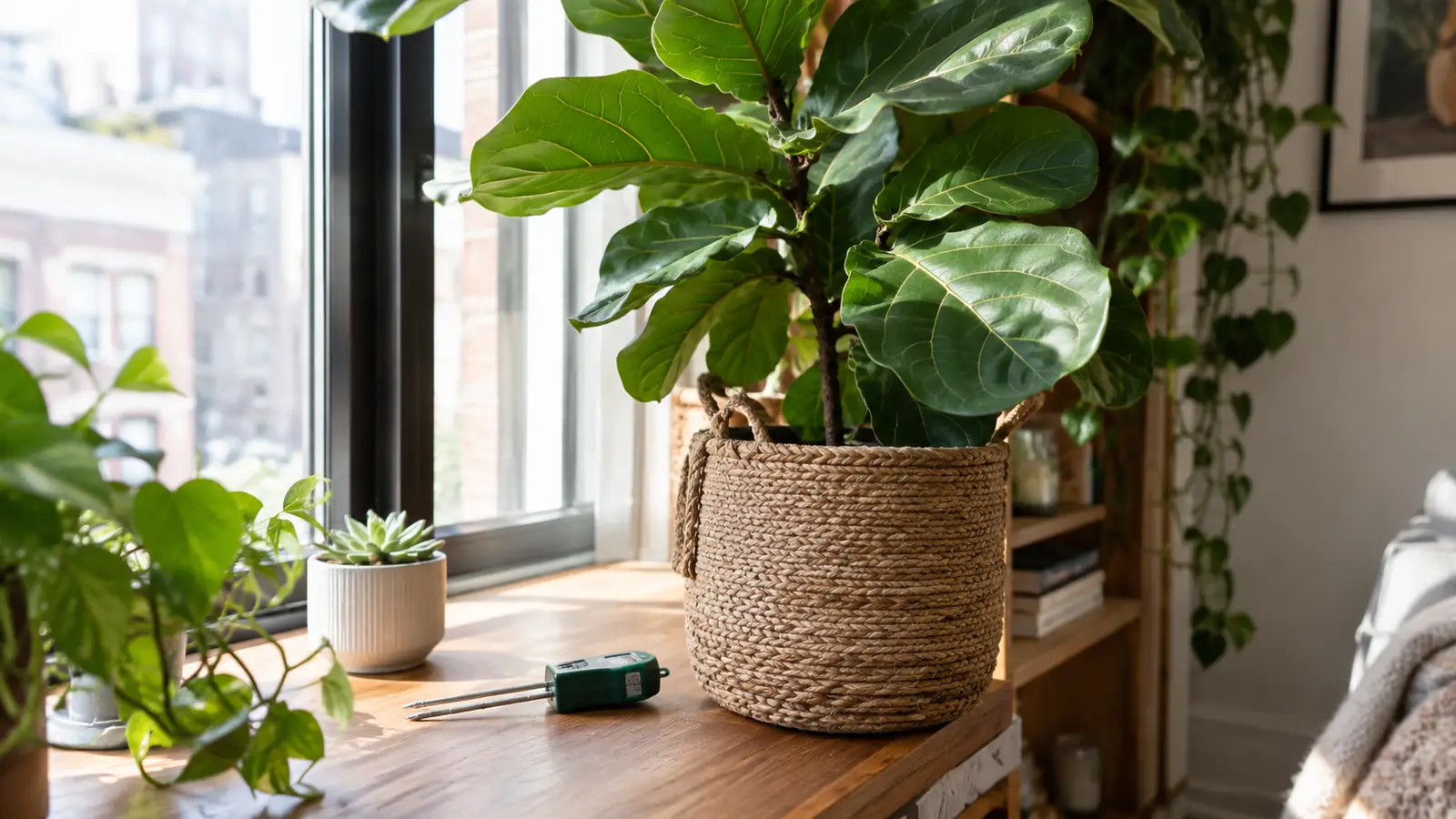
I killed my string of pearls in about six weeks. The leaves were plump one Sunday, wrinkled the next, and then they started coming off in strings whenever I touched the pot. I blamed the light. I blamed the draft from the living room window. I did not blame the thing that was actually killing it, because I couldn't see it. The top of the soil felt dry, so I watered. Underneath, the roots were sitting in cold, wet soil the whole time.
The string of pearls was the first plant I lost to overwatering, but it was not the last. Two calatheas followed, then a maidenhair fern, which I bought knowing full well that everyone warns you about maidenhairs. Same story each time. The surface looked dry, so I watered on schedule, and the roots drowned in soil that never actually dried out. I am 46, I keep 31 houseplants in two rooms of a third-floor walk-up in Portland, and I had killed four of them with kindness.
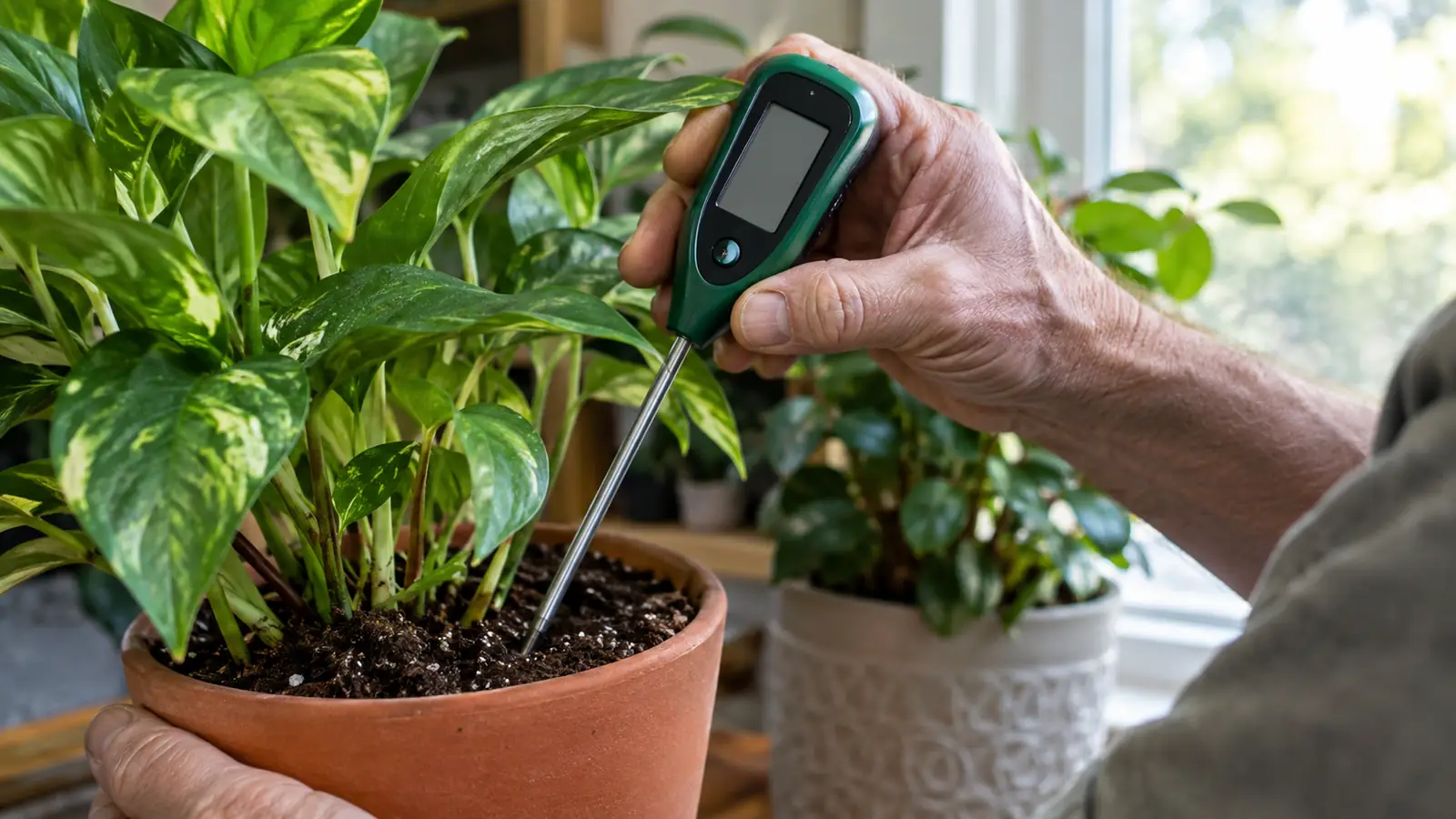
The fix was embarrassingly simple, and I wish I had bought it before the fern died. The XLUX moisture meter is a long metal probe with a dial on top. No batteries, no app, nothing to charge. You push the probe into the soil and read the needle: wet, moist, or dry, all the way down at root level where it actually matters. My watering routine had been built on the finger test, and the finger test lies. The top inch dries out fast, especially with forced-air heat running all winter. Two inches down, the soil can still be soaked.
I have one good east-facing window that gives the plants direct sun until about eleven in the morning, and one north-facing bedroom window that gives them nothing, so drying times are completely different from one room to the next. I was treating every plant like the same plant. The first Sunday I used the meter, it told me that Gus, my nine-year-old fiddle leaf fig, was still wet two inches down a full week after his last watering. The surface had looked bone dry. I had been watering him on a schedule, not on evidence, for years.
Gus was still wet two inches down, a full week after his last watering. The surface had looked bone dry.
Stop Trusting the Finger Test.
The XLUX two-pack tells you what the surface can't: whether the soil at root level is actually dry. Battery-free, no app, just a needle and the truth. Check today's price on Amazon.
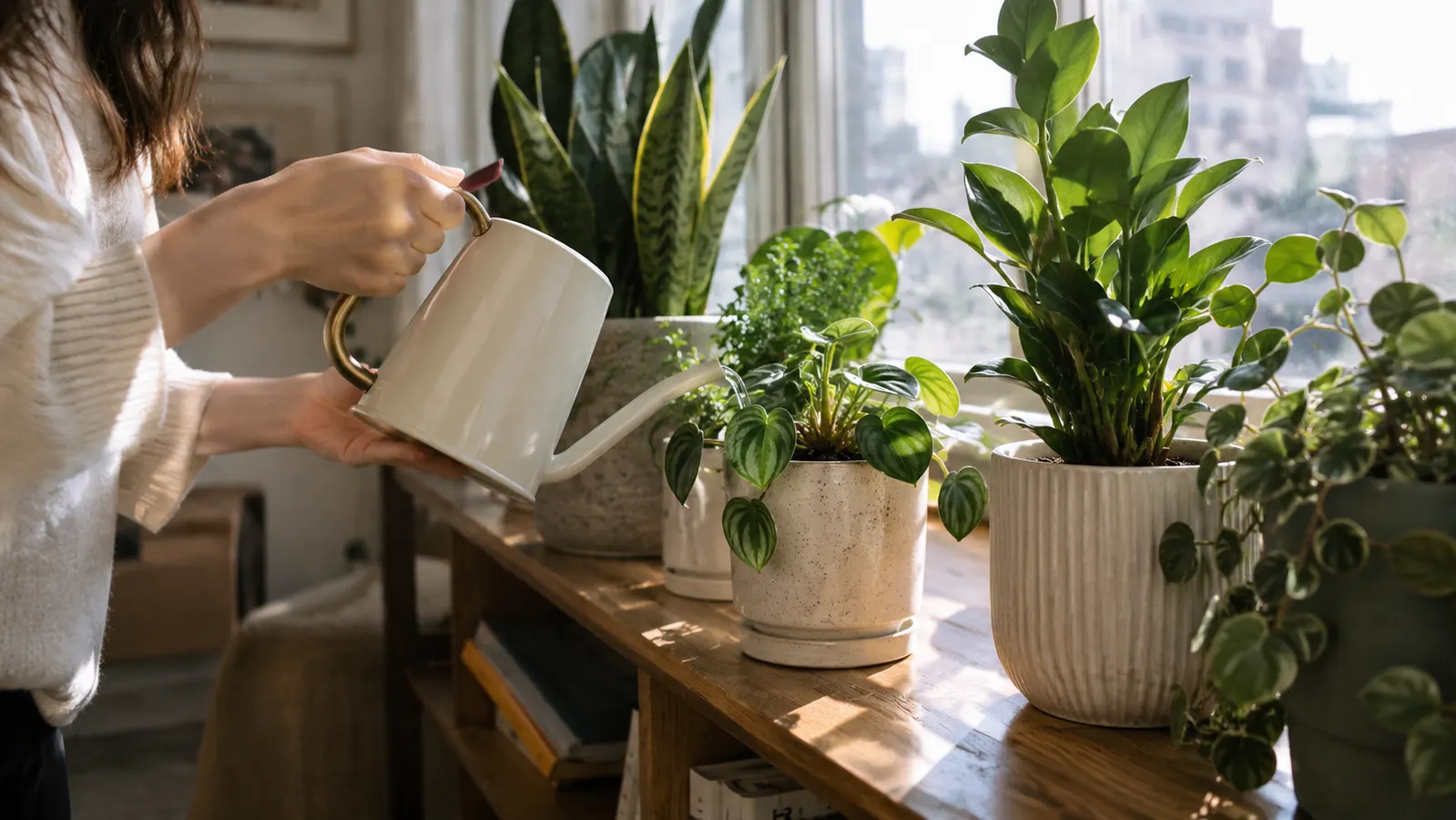
Amazon Check Today's Price on Amazon →The change wasn't dramatic, which is exactly why I trust it. My Sunday morning watering round now starts with the probe, not the watering can. I test each plant that's due, and I only water when the needle sits in the moist zone or below. Some plants that I used to water every seven days now go ten days, sometimes two weeks. The calathea that replaced the one I killed has kept its leaves, which for me is a minor triumph I do not take for granted.
The two-pack matters more than I expected. One probe lives in the living room with the plants that get real morning sun, and one lives in the bedroom for the ones that don't. I do not have to carry a tool across the apartment or remember which room it was in. The probes are battery-free, so there is nothing to charge and nothing to break. After each use I wipe the probe clean and put it back. That is the entire maintenance routine.
To be honest about its limits: the meter only reads moisture. It will not tell you about light, humidity, pests, or whether a plant is rootbound. The probe has to go into the soil at the edge of the pot, and you should not leave it sitting in the soil between waterings, because the metal can develop spots. And the needle gives you a zone, not a precise number. None of that bothers me. My failures were never subtle. I was drowning plants whose surfaces looked dry, and this tool catches exactly that.
Would I buy it again? Yes, and I have already recommended it to two people, both of whom killed plants the same way I did. It is the cheapest diagnostic tool I own, and it changed a routine I had followed wrong for years. If you have killed a plant and you are not sure why, that is the question to answer first: is the soil at root level actually dry before you water? Most indoor plants die from too much water, not too little. I know, because I did it four times before I bought a meter.
What I'd Tell You If We Were Sitting at My Kitchen Table
Here is what I would say, and I would say it plainly. Stop buying new plants until you know how wet the soil in the old ones actually is. Get a moisture meter before you get another calathea, and use it every single time you water, not just when you remember. Water on a schedule if that is the only way you will remember, but only after the probe confirms the soil has dried out. And when a plant dies, assume you overwatered it before you blame the light. In this apartment, with this heating system, that has been the answer every single time.
One more thing, and this is the part I wish someone had told me. The meter is not a cure for everything, but it removes the most common cause of death from the equation. That leaves you free to notice the actual problems: the leaf that is pale, the stem that is stretching toward the window, the soil that has gone hard and water-repellent. You cannot fix what you cannot see, and the meter let me see the one thing I kept getting wrong.
One Tool, Two Rooms, Zero Guessing.
My watering round takes ten minutes longer because I test first. It has also stopped the dying. If you are watering on a schedule and hoping, the XLUX two-pack is where I would start. Check today's price on Amazon.
Amazon Check Today's Price on Amazon →