
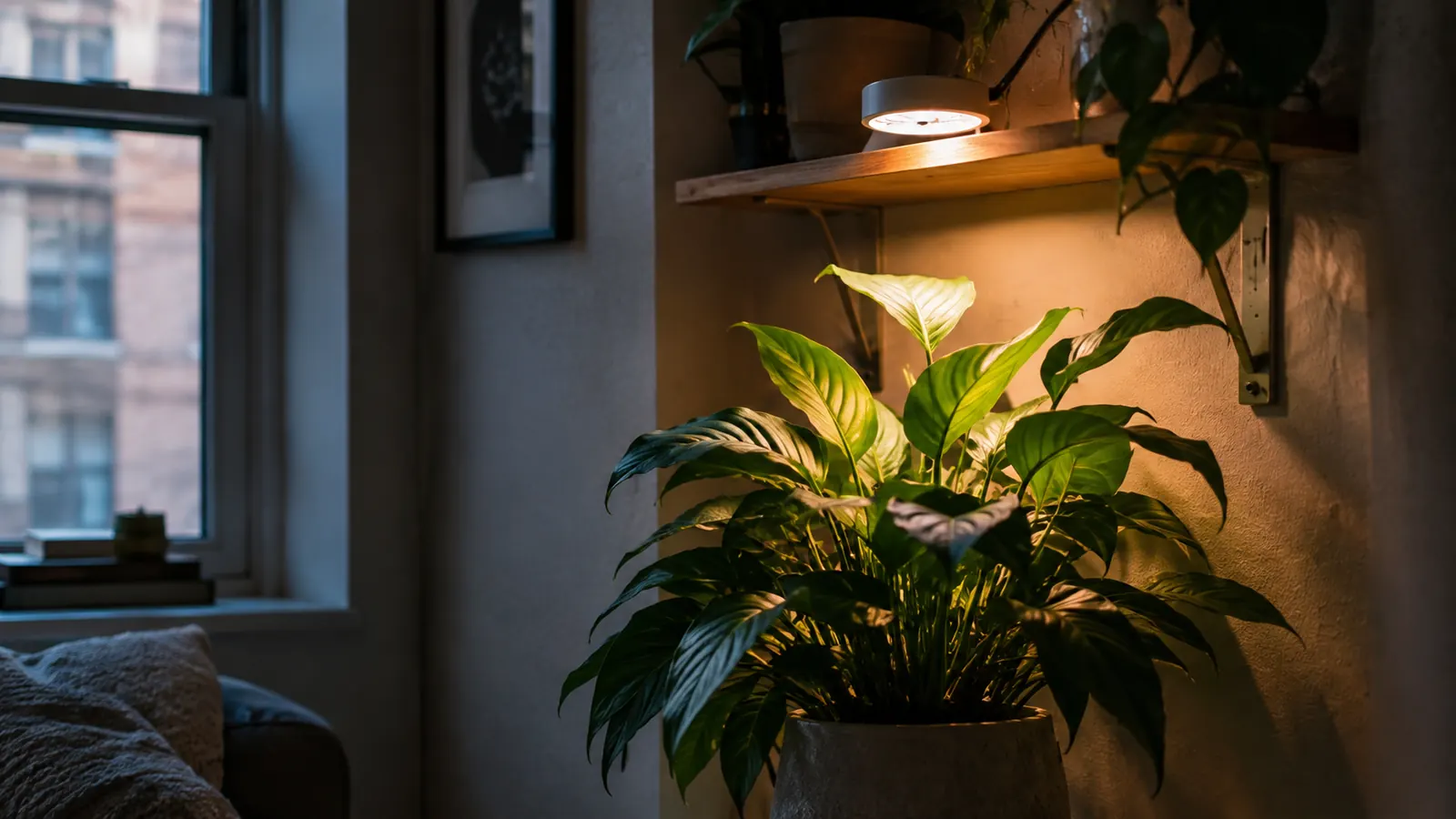
Six months ago I mounted the GooingTop grow light on a shelf in my bedroom, the one with the weak north window that gets no direct sun at all. I did not expect much. That window had already cost me a string of pearls, two calatheas, and a maidenhair fern, and I was tired of buying replacements. I mounted the GooingTop above the plants, set the timer for eight hours, and mostly forgot about it. Then, around week three, the begonia that had been dropping leaves started pushing out new ones. By the end of winter, the same shelf looked like a different room.
This is not a review written after a weekend with the light. I ran it for six months in the worst spot I own, through the darkest part of a Portland winter, and I kept notes the way I keep notes on everything: in a spiral notebook, in pencil, with dates. What follows is what actually happened, including the parts I would change.
The Quick Verdict
A solid, easy to use grow light for apartment plant people who need to rescue one dark corner. It is not a greenhouse replacement, but it does what it promises, and six months in, mine is still running.
Amazon Check Today's Price →The Grow Light That Earned Its Shelf Space
I ran the GooingTop for six months in my darkest room, and it is still earning its spot. If you have one corner that never gets enough sun, this is the light I would start with.
Amazon See It on Amazon →How I've Used It
Let me set the scene. I live in a third floor walk up in Portland with 31 houseplants and two windows that matter. The living room has an east window that gets direct sun until about eleven in the morning, and Gus, my fiddle leaf fig of nine years, sits right in front of it. The bedroom has a north window that gets light but never sun. That is where the GooingTop went, because that is where every low light plant was slowly sulking.
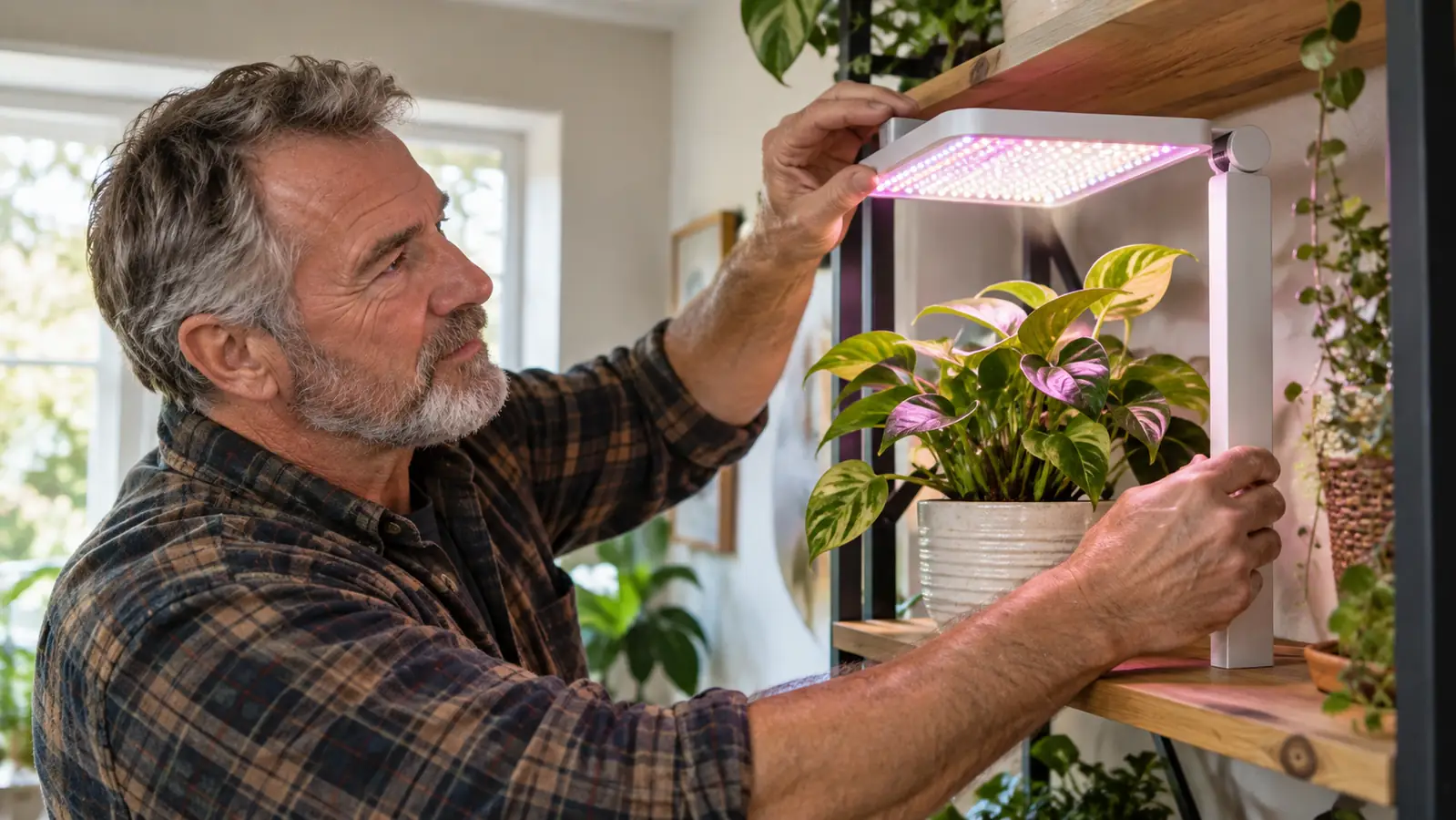
I set the timer to run from 7am to 3pm in the fall, then shifted it to 8am to 4pm in the darkest weeks of winter. The light sits on the shelf about eight inches above the pots. I aimed it straight down at first, then tilted it slightly toward the wall so the back row of leaves got some light too. I watered on Sunday mornings as always, and I did not change anything else about the room. That is the only way a test like this means anything.
The unit has a timer dial and a simple on and off switch, and it took me longer to pick which shelf to use than it did to set it up. The light head is easy to angle, though you do need to tighten the joint firmly or it slowly droops. I tightened mine once in six months and it held after that.
Why I Needed a Grow Light at All
Before this, I had always assumed the answer to a dark apartment was fewer plants. The string of pearls went first, then two calatheas, then a maidenhair fern. Each time I told myself the problem was me, that I watered wrong or chose plants that were too fussy. The truth is I chose plants that need more light than a north window ever gives, and no amount of careful watering was going to fix that.
The east window in my living room is the good one. Gus, my fiddle leaf fig, has sat there for nine years and he is the proof that light, not luck, is what keeps a plant alive. The bedroom was the opposite problem. I wanted plants in there because it is the room I see first in the morning, but everything I put on that shelf slowly faded. A grow light seemed like the obvious answer, and I put off buying one for two winters because I was not sure it would be worth the trouble.
What Six Months of Light Actually Did
The first change was small. Within about ten days, the pothos on the top shelf started turning its leaves toward the light, which sounds obvious but was a surprise in a room that had never had a strong light source. Around week three, the begonia began pushing out new leaves. By week eight, the African violet, which I had written off after it went two years without blooming, produced two flowers. That alone made the experiment worth it.
The bigger change happened in January and February, when the apartment gets almost no sun and the forced air heat makes everything dry. In past winters, that bedroom shelf lost leaves steadily. This winter, with the GooingTop running eight hours a day, the plants stayed full. A few even grew. The difference was not dramatic, no sudden growth spurt, but it was consistent, and consistent is what keeps a plant alive in an apartment.
I also paid attention to the electric bill. I cannot give you an exact number because rates vary, but the change was small enough that I had to go back and check the meter twice. For a light that runs eight hours a day, that is the number that matters to me.
Where the GooingTop Falls Short
The biggest limit is coverage. The GooingTop is a small light, and it lights a shelf, not a room. On my widest shelf, the plants at the edges clearly got less light than the ones in the middle, and I solved that by rotating the pots every couple of weeks. If you have a wide plant table, you will likely need two of these rather than one in the middle.
The color temperature is fixed at 6000K, which is a cool white. I do not mind it because it looks closer to daylight than the pink purple lights some people use, but if you want a warm glow in your living room, this is not the light for that. It also has no dimmer, so the only way to adjust intensity is to move the head closer or farther away.
The timer is the other small annoyance. It is a simple dial, but the markings are not the clearest, and I set it wrong twice before I got the hang of it. Once you know the position you want, it stays there, but it is not a light you can program with fine control.
What I Liked
- Made a real difference in my darkest room within three weeks
- Simple to set up and easy to angle
- Runs cool enough to sit close to leaves without scorching them
- Small effect on the electric bill for eight hours of daily use
Where It Falls Short
- Coverage is small, so wide shelves need more than one unit
- Fixed 6000K light, no dimmer and no warm setting
- No way to adjust intensity except moving the whole light
- The timer dial is a little stiff to turn
The same shelf that spent every previous winter dropping leaves put out new growth within three weeks of the GooingTop going on.
What I Learned About Light and Apartment Plants
The most useful thing I learned is that most houseplants are more flexible about light than I thought. They do not need a south window. They need a predictable source of light for a set number of hours, and they need it consistently. A timer matters more than a fancy bulb. The GooingTop runs the same eight hours every day, and that regularity is probably why my plants responded better than they did in the years I moved pots around chasing the sun.
The other thing I learned is that distance matters more than I expected. When I first set up the light, I put it about fourteen inches above the shelf because I was afraid of burning the leaves. The plants stretched toward it. When I moved it down to about eight inches, the leaves stayed put and the growth was denser. The light runs cool enough that my plants were fine close to it, which is something I had worried about.
I also stopped moving the plants so much. Once the GooingTop was in place, I let the plants stay where they were and only rotated the pots a little each week. Plants hate being shuffled around, and a steady position plus steady light did more for them than all my previous fiddling.
The last thing I learned is that a grow light does not make a plant immortal. It makes a plant able to get through winter, which in an apartment is most of the battle. The GooingTop bought my shelf time, and that is more than the north window ever gave me.
How to Get the Most Out of This Light
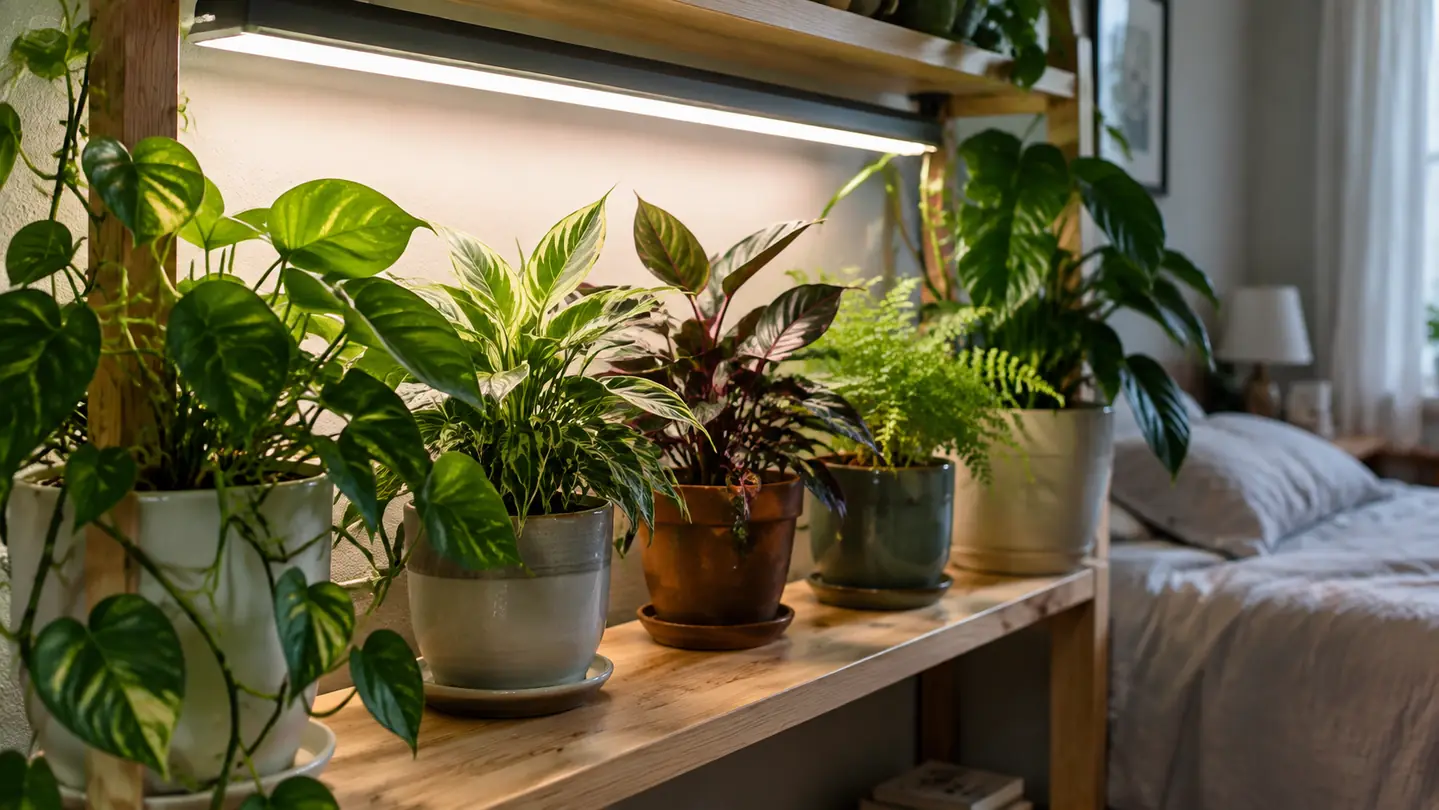
Set the timer for a consistent block, not random hours through the day. I ran mine from mid morning to mid afternoon, which matched the natural daylight pattern and kept the light from glaring at me in the evening. Consistency is the whole point.
Start with the light closer than you think is safe, then watch the top leaves. If they curl or bleach, move it up a few inches. If the plant leans toward the light, it wants to be closer. I found the sweet spot for most of my plants was about eight to ten inches above the top leaves.
Do not expect the light to fix watering problems. It will not. A plant sitting in soggy soil will still drop leaves under a good light, and a thirsty plant will still wilt. The GooingTop handles the light side of the equation. You still have to handle the water, and for me that means Sunday mornings.
Use it on the shelf that needs it most. I started with the bedroom because that was my weakest spot, and I did not try to light the whole apartment. One shelf, one light, one consistent schedule. That made it easy to see whether the light was actually doing anything.
Who This Is For
Buy the GooingTop if you live in an apartment or rental with one bad window and a shelf of plants that are alive but not happy. This is for the person who has already killed a plant or two, who wants to stop the dying without turning a bedroom into a laboratory. It is small, quiet, and easy to remove when you move, which matters when you rent.
It is also for people who do not want to think about their lights. The timer means the GooingTop comes on and goes off on its own, and the mount means you can set it up without drilling holes. I am the kind of person who forgets to water until Sunday morning, so a light I can set and ignore is exactly the right tool.
Who Should Skip It
Skip it if you already have a good south or west window with several hours of direct sun. A grow light is a substitute for sunlight, not an upgrade over it, and if your plants are already full and growing, you do not need this. The GooingTop is for the corners that sunlight never reaches.
Skip it also if you are trying to grow plants that need real intensity, like a full vegetable garden indoors or a collection of succulents that want to stay compact. A small light like this will keep many houseplants alive and growing, but it is not the tool for a serious grow setup.
The Bottom Line
After six months, the GooingTop is still on my shelf, still running on its timer, and still doing the job I bought it for. It did not turn my north bedroom into a sunroom, and I did not expect it to. It did something better: it stopped the slow decline that had been happening in that corner for years.
The GooingTop is not a fancy piece of equipment. It is a simple, dependable light that kept my plants alive through the darkest months, and that is exactly what I needed. I would buy it again, and I have already moved a second one to my desk for the plants that live there. If you have one weak window and a shelf of plants you are worried about, this is a good place to start.
I would also start the light earlier in the fall instead of waiting until the plants looked sad. The begonia recovered, but it dropped a few leaves before I got the light up. Next year the GooingTop goes on in October, before the decline starts, not after.
I would buy a second GooingTop for the desk in the corner of my living room, which is the other spot in the apartment that gets no direct sun. I have already done this, actually, because I was impressed enough after the first few months. The desk plants are doing better too.
If your apartment has one window that works and one that does not, you already know which shelf this is for. The GooingTop is not going to turn that shelf into a greenhouse, but it will stop the slow losing fight.
The Light Still on My Shelf
Six months in, the GooingTop is still running on its timer in my bedroom. If you have one dark corner and a shelf of plants you are tired of losing, this is the light I would start with.
Amazon See It on Amazon →