
I keep 31 houseplants in a third-floor walk-up in Portland, Oregon. No yard, no balcony, no greenhouse. What I do have is one east-facing window that gets direct sun until about 11 in the morning, one north-facing bedroom window that gets none, and forced-air heat that dries the apartment out every winter. For years I watered on a schedule I invented myself, and for years the results matched the method: plants I cared about died for no reason I could see.
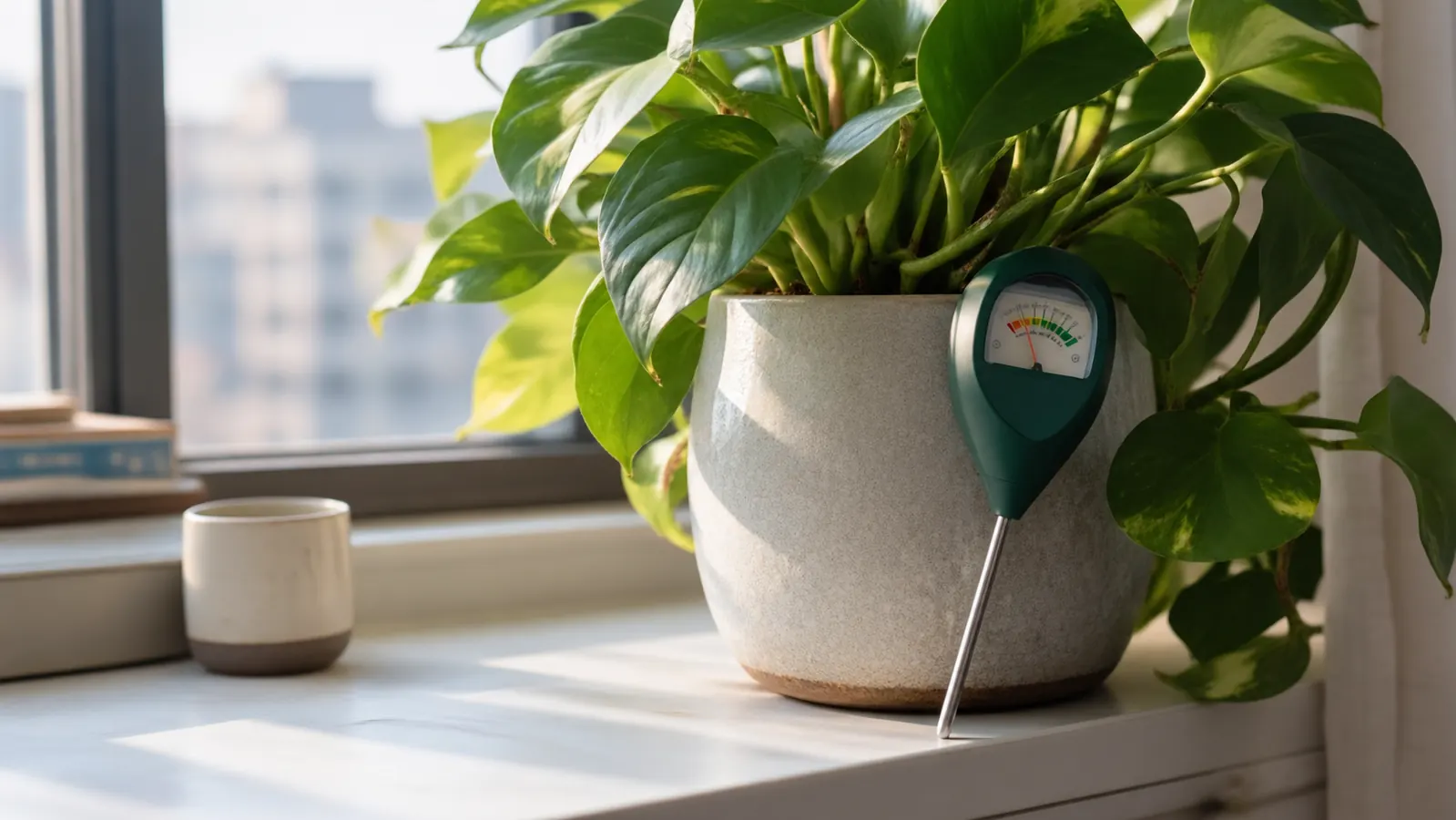
The fix was not more attention. It was one tool that tells me what is actually happening in the pot. A soil moisture meter is a plain probe with a gauge on top. You push it into the soil, wait a few seconds, and it reads how wet the root zone really is. I bought the XLUX two-pack after the second calathea died, and it changed which plants I still own today. Here are the ten reasons, in the order I noticed them.
The 2-pack that ended my overwatering
Two probes, no batteries, no app. Just a reading you can trust before you pour.
Amazon Check Today's Price on Amazon →It stops you from watering on a schedule that was never right
My Sunday watering was a ritual, not a decision. Everything got the same amount on the same day, because that is what routines are for. The problem is that a plant in the east window dries out twice as fast as a plant in the north window, and a big pot holds water far longer than a small one. The XLUX probe goes down past the dry surface layer and reads the root zone. Within two Sundays I learned that a third of my plants did not want water on schedule at all. The routine now follows the readings, not the calendar.
It reads the root zone, not the surface
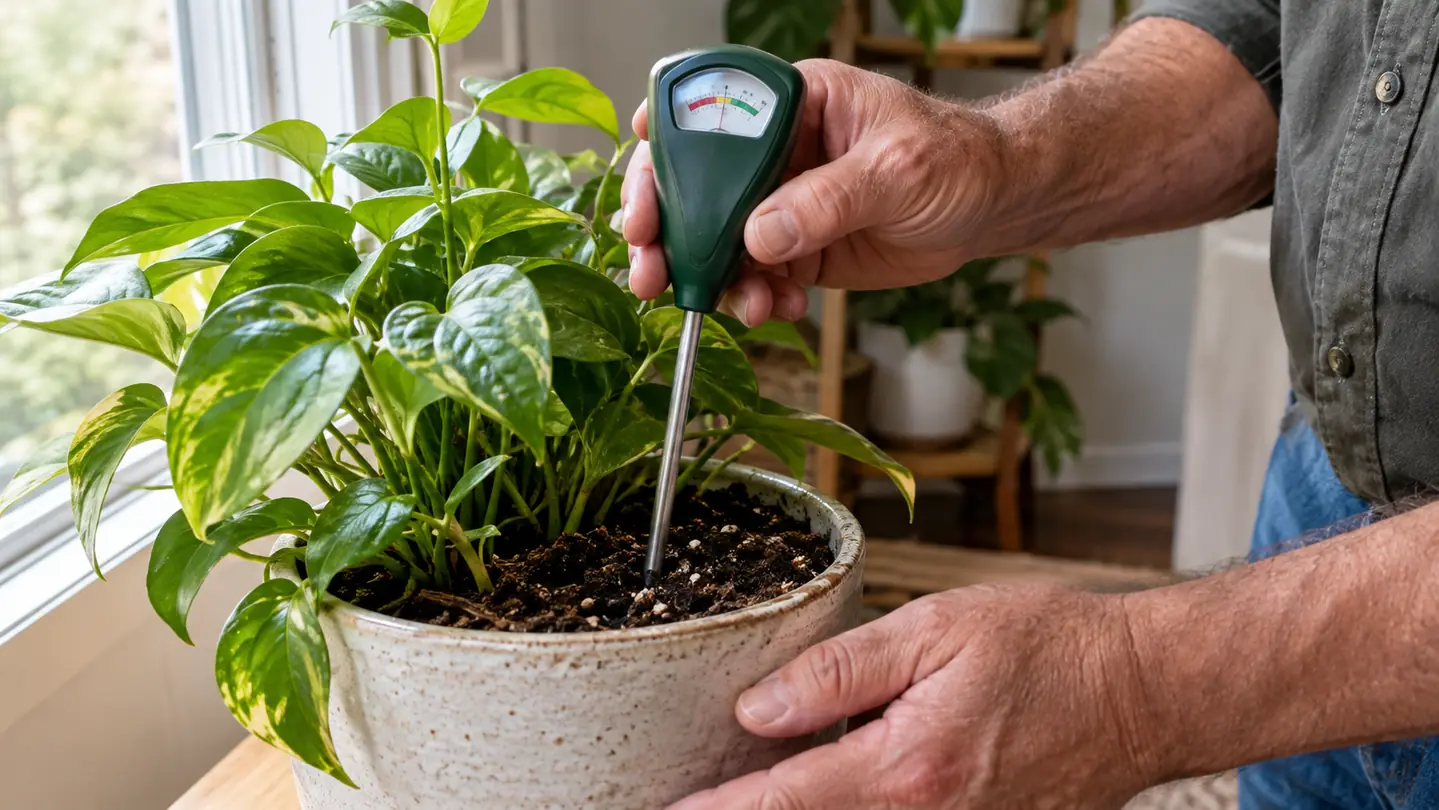
The top inch of potting mix can look bone dry while the roots are sitting in moisture. That visual trick is how I overwatered things for years. The long probe reaches deep enough to give you the real picture. When the needle sits in the middle of the moist zone, the plant is fine, no matter how dusty the surface looks. This one reading, taken seriously, stopped most of the damage I was doing with my watering can.
It works with zero batteries and zero apps
Every smart gardening gadget I have ever owned needed a charge at exactly the wrong moment. The XLUX meter is battery-free. There is nothing to plug in, nothing to pair, nothing to update. You push the probe in, read the needle, pull it out. Mine has sat in a drawer for a year and still works the same as the day it arrived. That simplicity is the whole point for a person who already owns too many things that need charging.
It tells the truth about your two different windows
My living room window gives direct sun until mid-morning. My bedroom window gives none, ever. The same watering day was wrong for one of those rooms every single week. With a meter in each room, I can see that the living room plants are ready for water while the bedroom plants are still moist. Same apartment, same week, completely different needs. The meter does not judge either room. It just reports what the soil says.
It made my Sunday watering honest
I still water on Sunday mornings, because I commute by bike and cook most weeknights, so a weekday watering round never happens. What changed is what happens before the watering can comes out. I go around with the probe, check each pot, and only water the ones that read dry. The whole round takes a few minutes. Some Sundays I water six plants. Some Sundays I water two. Both are correct, and I know which because the meter told me.
It flags the dry winter air before the leaves do
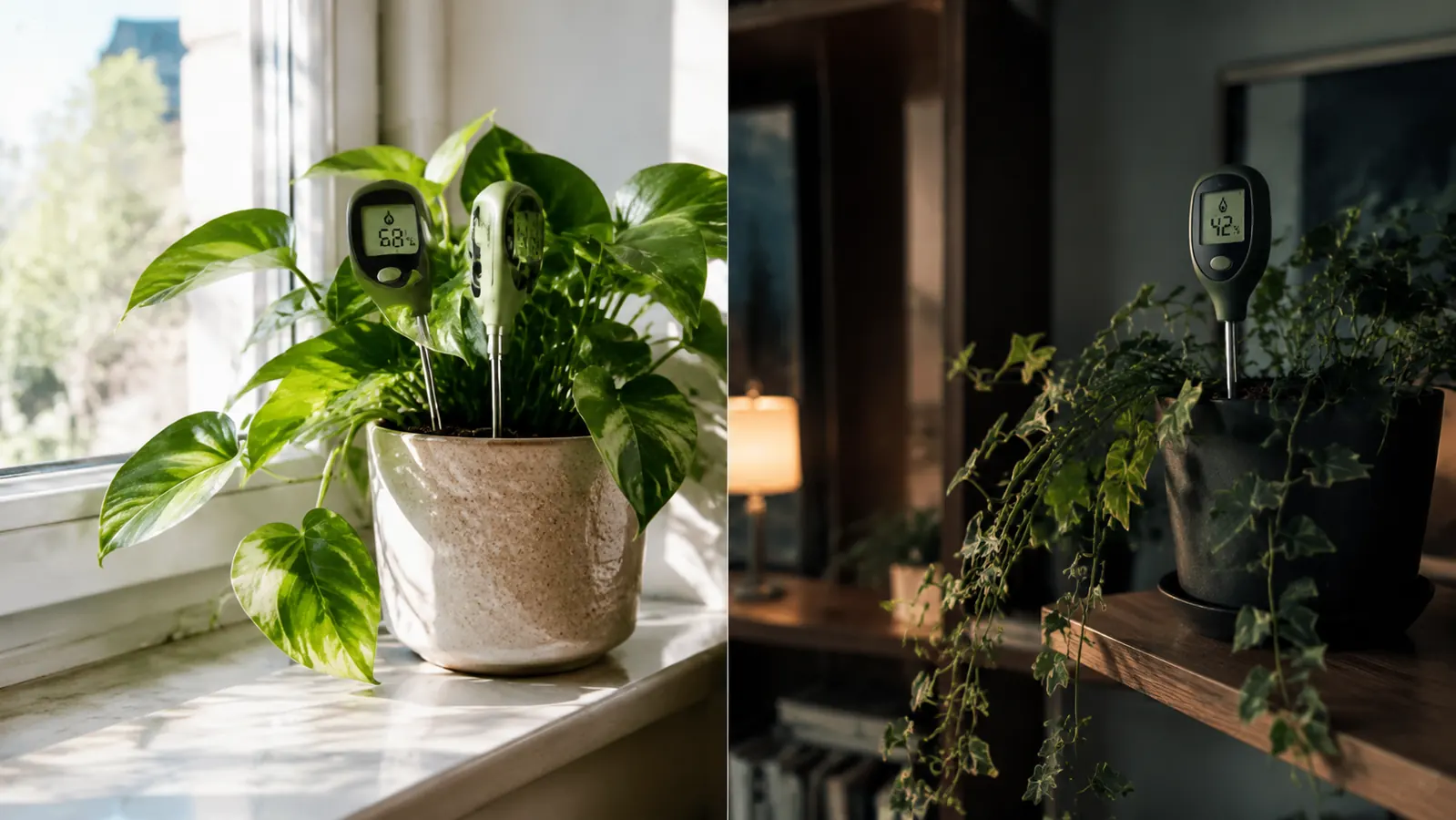
Forced-air heat turns my apartment into a desert every winter, and the soil dries out faster than my eyes expect. The meter shows it early, when the moisture reading drops a few days ahead of the schedule. That is my cue to move the humidifier closer and group the plants, not to water more. The humidifier is a general-purpose one I already owned, nothing fancy. The meter just tells me when the room needs it.
The two-pack fits the way my apartment is laid out
One meter lives in the living room by the east window. The other stays in the bedroom where the light is weak. I do not carry one probe from room to room, and I do not lose it under a pot between waterings. The XLUX two-pack covers both halves of the apartment, which is exactly the point. It sounds like a small thing until you have walked across a cold floor at 8am to find the probe you left in the other room.
It tells you when NOT to water, which is the real skill
The most valuable reading this meter gives is the one that stops my hand. Overwatering killed my string of pearls, my two calatheas, and a maidenhair fern. All three died because I watered on a feeling, and the feeling was wrong. Now when the needle shows moisture, I put the can down. Learning to skip a watering is harder than learning to do one, and this tool makes the skipping easy.
It is forgiving of a distracted plant keeper
I am not someone who notices a drooping leaf on sight. I am someone who finds out a plant is thirsty when it has already made its point. The meter is fast and obvious. Push, read, move on. It does not need me to remember which plant likes what, because the soil tells me directly. For anyone whose attention is split between work, dinner, and everything else, that directness is the feature that matters.
It protects the plants you have kept for years
The oldest plant I own is a fiddle leaf fig I have kept alive for nine years. He has survived moves, winters, and my worst watering habits, and I would rather not test him further. A cheap probe is the difference between watering him on a hunch and watering him on evidence. It is the same reason I bought the two-pack at all: not to collect more plants, but to stop losing the ones I already have.
What I'd Skip
This meter is not for everyone, and I would not pretend otherwise. If you own one or two plants and can judge them by lifting the pot to feel the weight, you probably do not need it. If you grow mostly succulents and cacti and you are trying to water less, the probe will just confirm what you already intend. And if you want an app with history charts and notifications, this is deliberately the opposite of that. It is an analog tool for people who want a straight answer, not a dashboard. I also keep the probe out of the soil for a minute before reading, and I wipe it after, because that is what the instructions say and it keeps the reading honest.
One Sunday with the meter showed me that the plants by the north window go two weeks between waterings, not one. I had been watering them every Sunday for a year.
Stop guessing. Let the probe tell you.
Two battery-free meters, one for each end of the apartment, and the last watering decision you have to make on a hunch.
Amazon Check Today's Price on Amazon →