
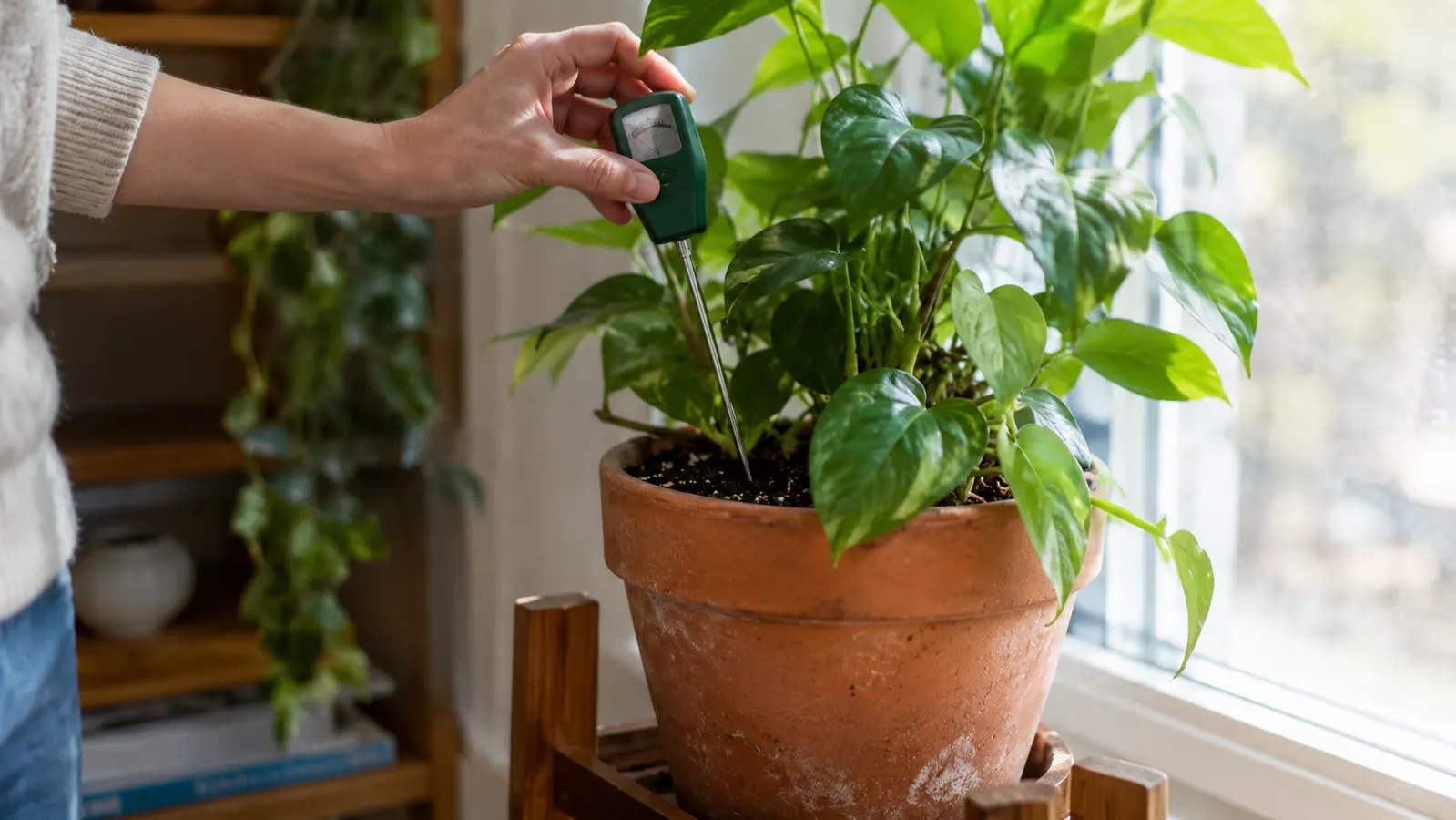
I killed a string of pearls, two calatheas, and a maidenhair fern before I admitted the problem was not the plants. It was me. I watered on a schedule. Every Sunday morning, same as clockwork, I went around the apartment with the watering can and gave everything a drink, because that is what the plant care articles said to do and because a weekday watering round never actually happened in my house. I commute by bike, I cook most weeknights, and by the time I thought about the plants it was dark. So Sunday it was. The string of pearls went first, soft and translucent at the base. The calatheas crisped at the edges, then yellowed, and the maidenhair fern dropped every frond in about ten days. All of them died of the same thing: roots sitting in wet soil for weeks on end. I did not need another watering schedule. I needed to know what was actually happening below the surface. That is why I bought the XLUX 2 Pack Long Probe Plant Soil Moisture Meter, and it is the reason I have not killed a plant since.
The XLUX meter is about as simple as a tool gets. No battery, no screen, no app. You push the long metal probe into the soil, wait about a minute, and read the dial, which runs from dry to wet on one side and shows a 1 to 10 scale on the other. The whole thing comes two to a pack, which matters more than you would think. One meter lives in the living room by the east window. The other stays in the bedroom for the north-facing plants. I have used mine every Sunday for four months now, and the process below is exactly what I do. It took me about three weeks to trust it, and about six weeks before watering stopped feeling like a guess.
Stop guessing, start checking
The XLUX 2 Pack Long Probe Plant Soil Moisture Meter takes about a minute per plant and runs on no battery at all. It is the cheapest habit change I have made for my plants, and it is the one that finally stopped the overwatering.
Amazon Check Today's Price on Amazon →Step 1: Admit the schedule is the problem
Before the meter does you any good, you have to stop watering on a calendar. I know this sounds obvious. It was not obvious to me. I had read somewhere that most houseplants want watering once a week, and I treated that like a prescription. What I did not understand is that once a week is an average for a plant in a certain pot, in certain light, in a room at a certain temperature. My living room gets direct sun until about 11am through the east window in summer and almost none in December. A plant that needs water every five days in July can go twelve in January. A calendar cannot know that. The meter can.
The fix is not to throw away your routine. Sunday morning is still when I check the plants, because it is the only time I am reliably home with enough daylight to see what I am doing. The change is that Sunday is now a checking day, not a watering day. I go around with the meter first, and the watering can only comes out for the plants that actually read dry. Some weeks that is eight plants. Some weeks it is three. One week in February it was none, because the apartment ran cold and the forced-air heat had not kicked in yet. The meter told me so. The calendar would have had me drowning them.
Step 2: Learn what the dial is actually telling you
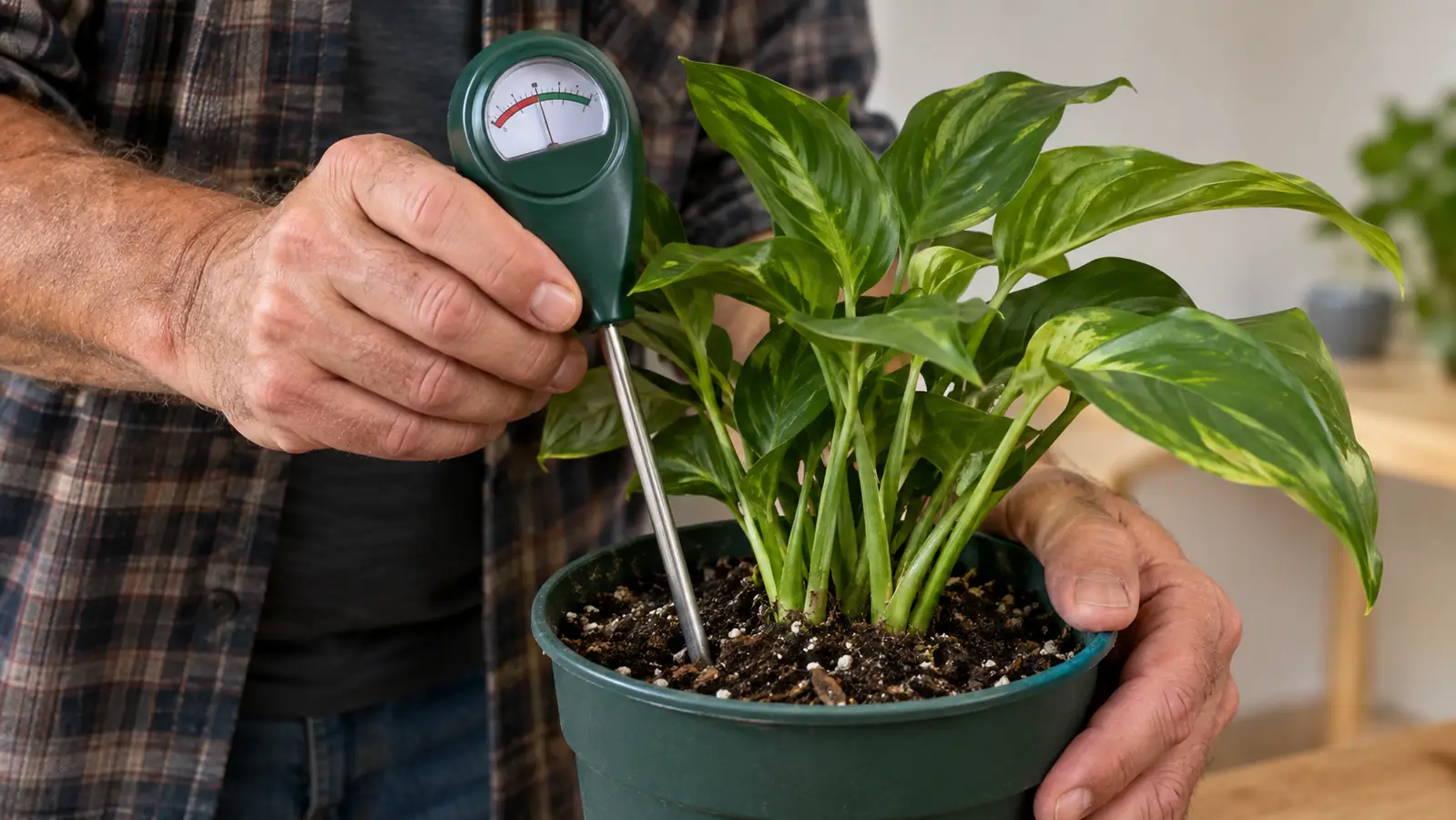
The XLUX dial has two scales printed on it, and they say the same thing in different languages. One side runs from Dry to Wet with a green zone in the middle labeled Moist. The other is numbered 1 through 10. In practice, you only need three numbers. A reading of 1 to 3 means the soil is dry. A reading of 4 to 7 means it is moist, and most houseplants are fine in that range. A reading of 8 to 10 means the soil is wet, and unless you are growing something that likes bog conditions, that is where the trouble starts.
Here is the part I got wrong at first. The number is not a plant report card. It is a snapshot of one spot in one pot on one day. The probe is long, and where you push it changes the reading. I check at the edge of the pot, not right against the stem, and I push the probe most of the way down so I am measuring the root zone, not the surface. Topsoil can look bone dry an hour after watering while the bottom of the pot is still soaked. That mismatch, dry on top, wet below, is exactly how I killed the calatheas. They looked thirsty. They were drowning.
One more thing the dial taught me: the difference between dry and bone dry. A reading of 2 means the soil is dry. A reading of 1 means it has been dry for a while, and the soil has pulled away from the sides of the pot. Neither number is an emergency on its own, but they ask different questions. At 2, I water that day. At 1, I water that day and I also wonder whether the plant needs a pot that holds moisture longer. That distinction came from using the meter weekly, not from any label on the package.
Step 3: Take a baseline reading of every plant
Before you can act on a number, you need to know what a normal number looks like for each plant. I did this badly at first. I took one reading, saw a 3, and watered everything that read below 5. That is a schedule wearing a meter costume. You are still watering by a rule instead of by need. The better approach takes one Sunday and about twenty minutes.
Here is what I did. I watered all 31 plants on a Sunday, the way I always had. Then, two days later, I went around with the XLUX and wrote down what each plant read. I did the same four days after watering, and again the following Sunday, right before I would normally have watered. That gave me three data points per plant. Gus, my fiddle leaf fig, read 7 two days after watering, 5 at day four, and 3 on day seven. A small pothos in the bedroom read 6, 6, and 6, because that pot holds moisture forever in the low light. Two completely different answers to the same question, which is the whole point.
You do not need a spreadsheet for this. I used a notebook page with a line per plant and three columns. The point is to build a rough map of how fast each pot dries, so that when you get a reading of 4 on a Sunday, you know whether that is a plant that will be thirsty by Tuesday or one that will coast for another week. After a month of notes, you will start to predict the readings before you take them. That is when the meter becomes a confirmation instead of a mystery.
Step 4: Water by the reading, not by the date
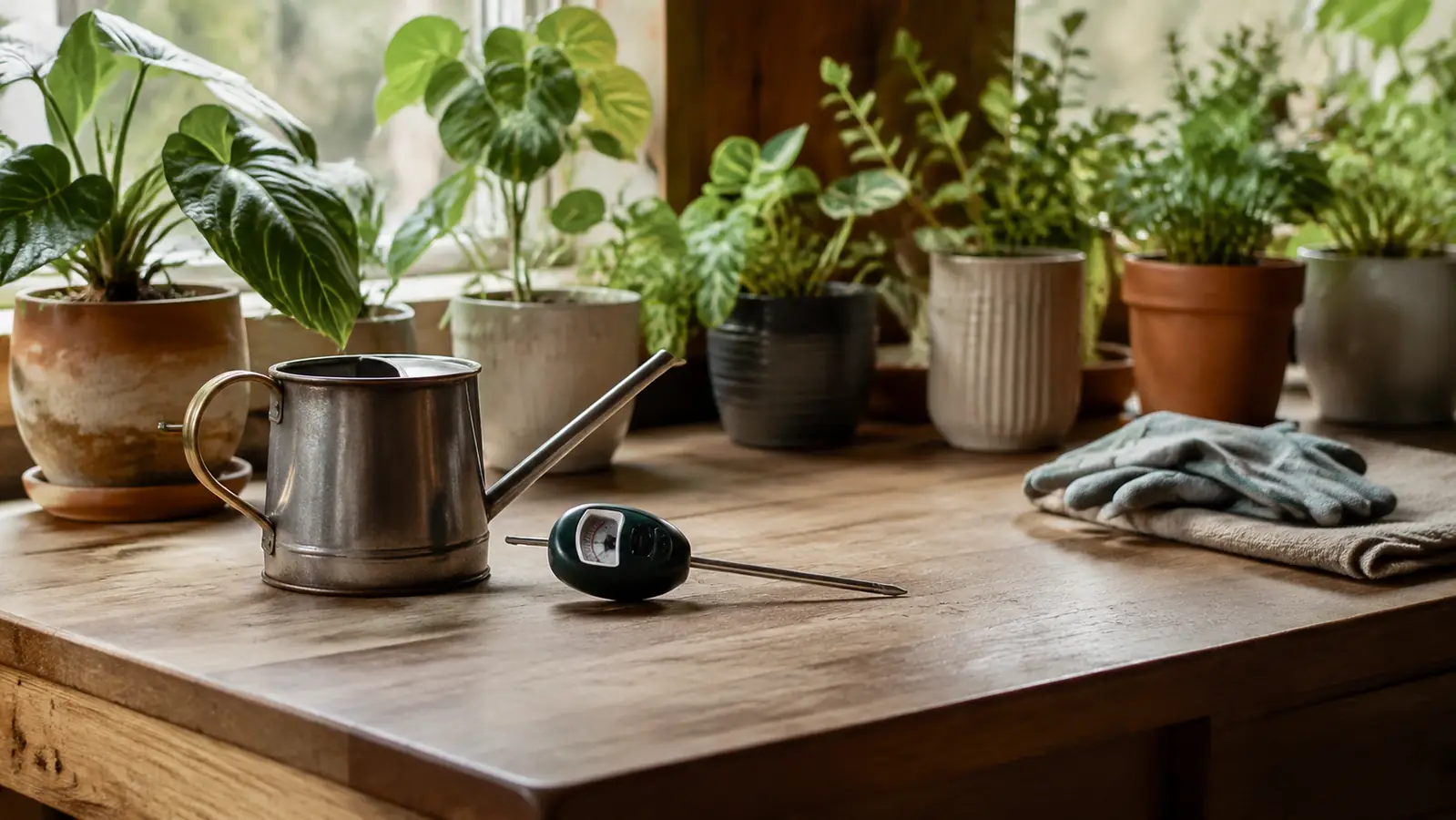
Once you have baselines, the weekly check gets fast. I start with the living room plants by the east window, because they dry fastest. I take the probe, wipe it clean, push it into the soil at the edge of the pot, and wait. The XLUX dial moves slowly, so I give it a full minute rather than trusting the first reading. Then I decide: water, or do not water. That is the whole decision.
My rule is simple. If a plant reads 1 to 3, it gets water. If it reads 4 or above, it waits until next Sunday. I do not top up a little for a plant that reads 5, because a little water on top of moist soil is how you create the wet bottom layer that rots roots. The meter has made me more disciplined, not less. There are plants in my apartment that have gone three weeks between waterings in winter, and they are healthier than they were when I was watering them weekly. The string of pearls that died would have loved that lesson, but it died before I bought the tool.
One practical note about the two-pack. Keeping one meter in the living room and one in the bedroom means I never skip a plant because the tool is in the other room. That sounds trivial until you are checking 31 plants on a Sunday morning and the bedroom ones are easy to skip. The second meter was cheap, and it removed the excuse. If you have plants in more than one room, buy the two-pack version of whatever meter you choose.
Step 5: Re-check after watering and adjust
Watering is not the end of the job. About an hour after I water, I go back with the meter and check a couple of the pots I just watered, especially the ones that were reading 1. What I am looking for is confirmation that the water actually reached the bottom of the pot. If the top of the soil is wet but the reading at depth is still 2, the soil has gone hydrophobic, which means water is running straight down the inside of the pot and out the drainage hole without soaking in. That happens more often than you would think with peat-based mixes that have been allowed to dry out completely.
When that happens, the fix is to water slowly, in two or three passes, letting each pass soak in before the next. Or, for the worst cases, sit the pot in a bowl of water for twenty minutes and let it wick up from the bottom. The XLUX will show you when it has worked: the reading at depth climbs from 2 to 5 or 6 over the course of an hour. You cannot see that from the surface. That is the entire argument for owning one of these.
The other thing I check after watering is the drainage. If a pot reads 9 or 10 the morning after watering, it is holding more water than the plant can use, and I need to either water less next time or check whether the drainage hole is blocked. My maidenhair fern died in a pot with a clogged hole, and I did not find out until I pulled the dead plant out. The meter would have flagged that pot weeks earlier. That is the part that stings.
What Else Helps
The meter fixes the water. It does not fix everything. I pair it with a few cheap habits that cover the other ways I used to kill plants. First, I water with room-temperature water from a watering can with a narrow spout, so I pour at the base of the plant instead of over the leaves. Second, I check the drainage holes on every pot every few months, because a blocked hole undoes all the good the meter does. Third, I stopped repotting on a schedule and started repotting only when the meter showed the soil drying suspiciously fast, which usually means the roots have filled the pot.
I also use the meter to double check the plants that are supposed to be easy. The snake plant by the north window reads 2 for weeks at a time in winter, and I let it sit. The pothos reads 6 no matter what I do, so I mostly leave it alone. The meter has made me a more hands-off plant keeper, which is the opposite of what I expected. I expected a tool that told me when to act. What it actually gave me was permission not to act.
The calendar had me drowning my plants. The meter had me leaving them alone, and they were better for it.
One tool, no battery, two meters
If you are still watering on a schedule because you cannot see what is happening below the surface, the XLUX moisture meter is the cheapest way to break the habit. I have used mine every Sunday for four months, and it is the first plant tool I have bought that actually changed what I do.
Amazon Check Today's Price on Amazon →