
I killed a string of pearls, two calatheas, and a maidenhair fern before I admitted the problem was never the plants. It was me. I water on Sunday mornings because I cook most weeknights and commute by bike, so a weekday watering round never actually happens. When Sunday gets busy, which it does, the plants wait. And the ones that like steady moisture do not wait well. By the time I noticed a calathea curling, it was usually too late to save it. I would apologize to the pot and start over, and then do the same thing three weeks later.
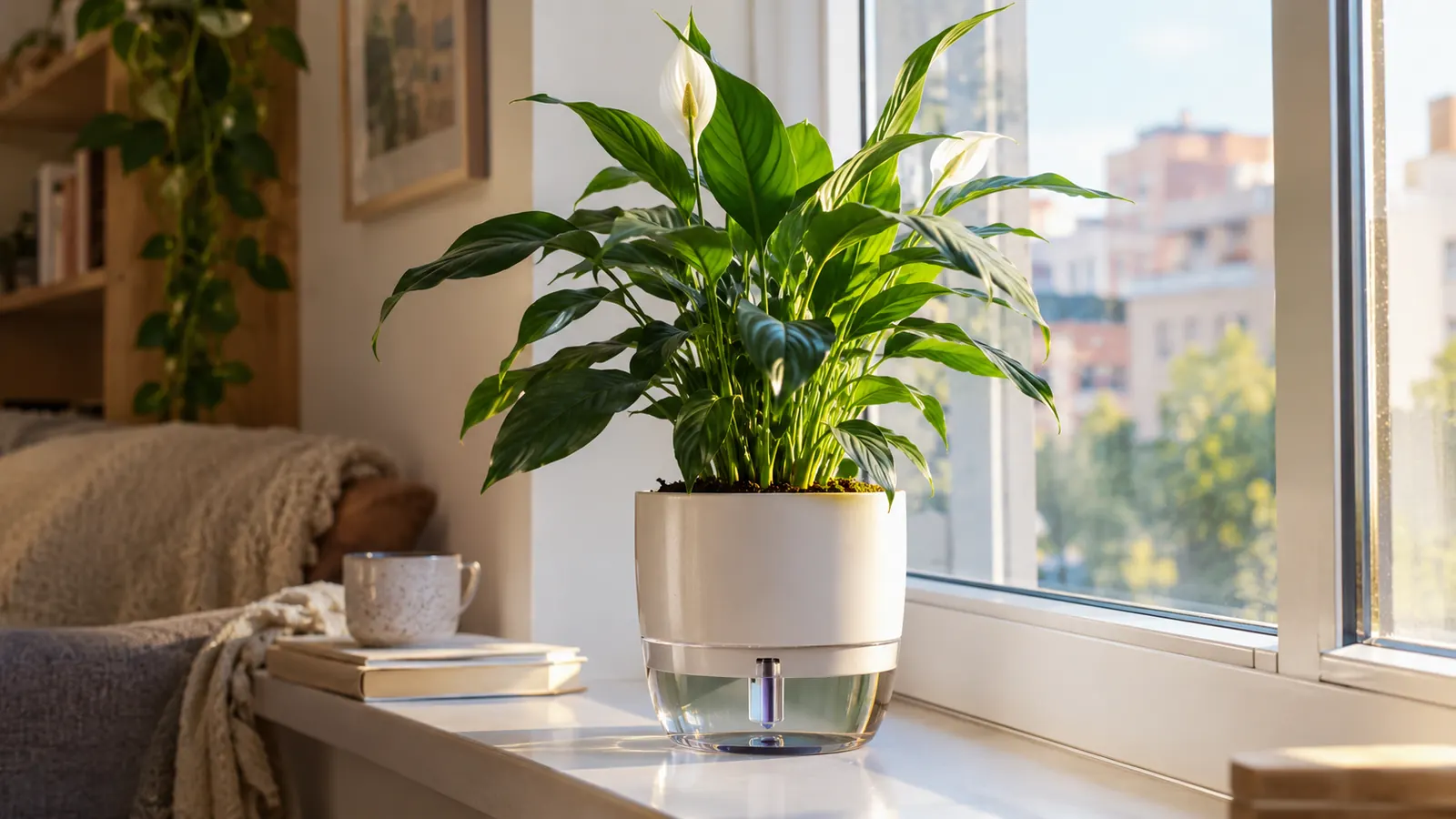
Self-watering pots are the fix I should have tried years ago. The GARDENIX DECOR self-watering pots, a three pack with a water level indicator, are what sit on my windowsills now. They do not water plants for you, which is the first thing to understand. They hold a reservoir of water below the soil and let the plant draw from it as it needs. Your job changes from remembering to water to remembering to check a little indicator. That is a much easier job, and it is one I can actually do on a busy week. Here is how I set them up, what I got wrong the first time, and what I would tell you before you repot anything.
Three Pots That Water on Their Own Schedule, Not Yours
The GARDENIX DECOR self-watering pots hold a reservoir below the soil and show you when it is running low. I use all three and check them every Sunday. See today's price on Amazon.
Amazon Check Today's Price on Amazon →How I Set Up the GARDENIX DECOR Pots
The setup took one afternoon, and I still had time to make dinner. The five steps below are the order I would do them in again. I made two real mistakes the first time, and both are worth naming before you start: I repotted into dry soil, and I kept watering from the top out of habit. The pots worked anyway, but the plants would have settled in faster if I had done it right the first time.
You do not need any special tools. A bag of indoor potting mix, the pots, and the plants you already own are enough. If you have a moisture meter, keep it nearby for the first two weeks. If you do not, you can skip it, the water level indicator does the job.
Step 1: Pick the Plants That Actually Want Even Moisture
Not every plant belongs in a self-watering pot. Anything that wants to dry out between waterings, like most succulents and any cactus, will sit too wet and rot. The GARDENIX DECOR pot keeps the soil evenly moist by design, so it suits plants that like that kind of steady drink: pothos, spider plants, peace lilies, and most of the common tropical houseplants people keep in apartments. That list is not a rule, just a starting point. Watch your own plant and let it tell you.
My string of pearls died because I gave it the opposite of what it wanted. It needed to dry out between waterings, and I watered it on a schedule anyway. A self-watering pot would have made that worse, not better. That is the honest version. Match the pot to the plant instead of assuming every plant wants one, and you will not repeat my mistake.
If you are not sure what you own, look at the leaves before you do anything. Thick, fleshy leaves usually mean the plant stores water and wants to dry out between drinks. Thin leaves that droop dramatically when thirsty, like a peace lily does, are the ones that thrive with steady moisture. The droopy ones are the ones to move into a self-watering pot first.
Step 2: Fill the Reservoir and Learn the Water Level Indicator
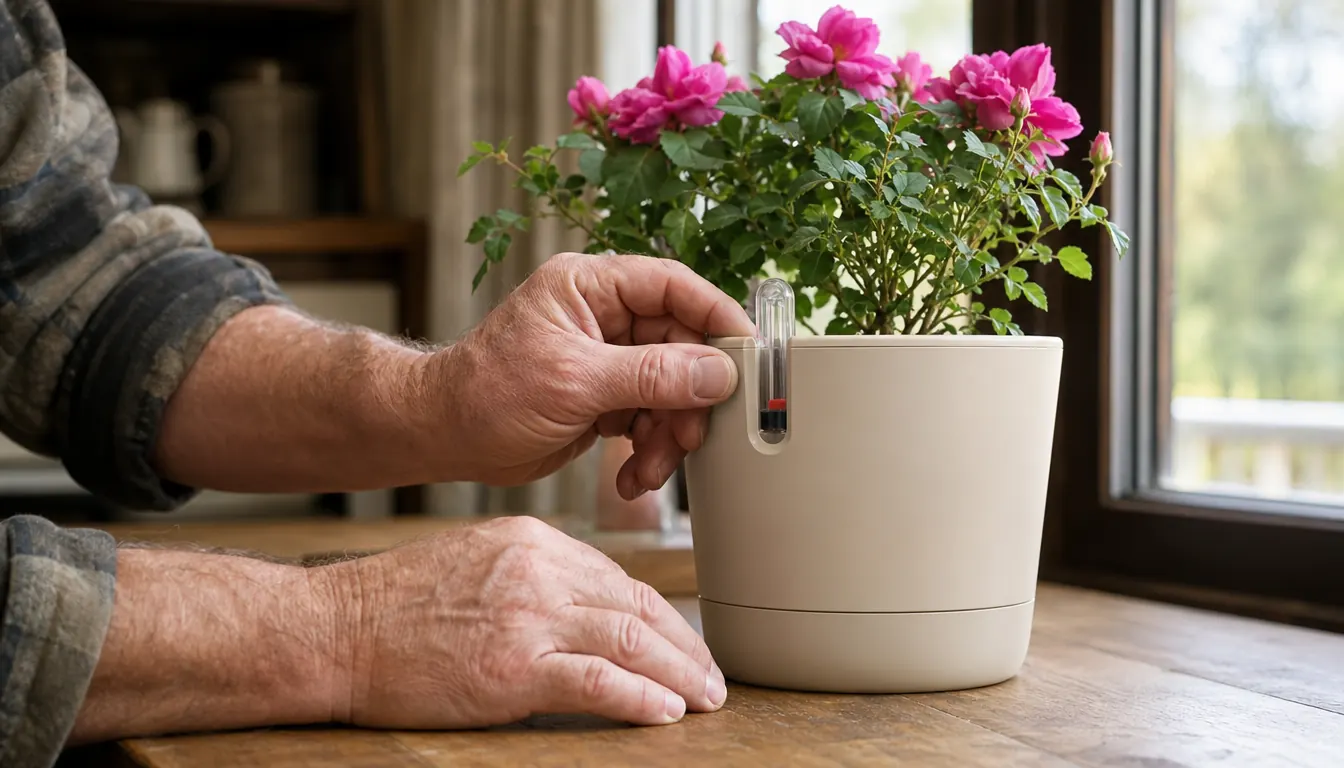
Before you put any plant in, fill the reservoir and watch the water level indicator move. The indicator is the little marker on the pot that shows how much water is left below the soil. On the GARDENIX DECOR pots it sits where you can see it without lifting the plant, which is the whole point. If you have to dig to check the water, you will not check it.
My first mistake was ignoring the indicator and watering from the top every time, out of pure habit. That fills the soil but does not refill the reservoir, so the plant still runs dry once the top water is gone. The indicator is the only thing you actually need to read. Treat it like the fuel gauge on a car. When it reads low, you refill. When it reads full, you stop.
Fill the reservoir until the indicator reads full, and do not keep pouring past that mark. The pot is not designed to hold water above that line, and overfilling just makes a mess on your windowsill. A small watering can with a narrow spout makes this easier. I use the same one I use for everything else, nothing special.
Step 3: Repot With the Right Soil and One Good Top Watering
Use a light, well-draining indoor potting mix, not garden soil and not anything you dug up outside. Garden soil compacts in a pot and stops letting water move through it. A standard bag of indoor potting mix from any garden center works fine. When you repot, do not pack the soil down hard around the roots. Roots need air as much as they need water, and packed soil starves them of both.
After the plant is in, give the soil one good watering from the top so the root ball makes contact with the moisture below. This is the one time top watering is correct. It primes the whole system. After that, the reservoir takes over and you leave the top alone. If you skip this step, the plant can sit for days with dry soil above a full reservoir, and you will not understand why it looks thirsty.
I repotted into dry soil the first time and then spent a week watching the plant sulk. The roots had nothing to reach. That single top watering at the start saves you a week of wondering what went wrong. It is the step most people skip because it feels like cheating, and it is the one that matters most.
Step 4: Make Refilling Part of Sunday, Not a Chore You Avoid
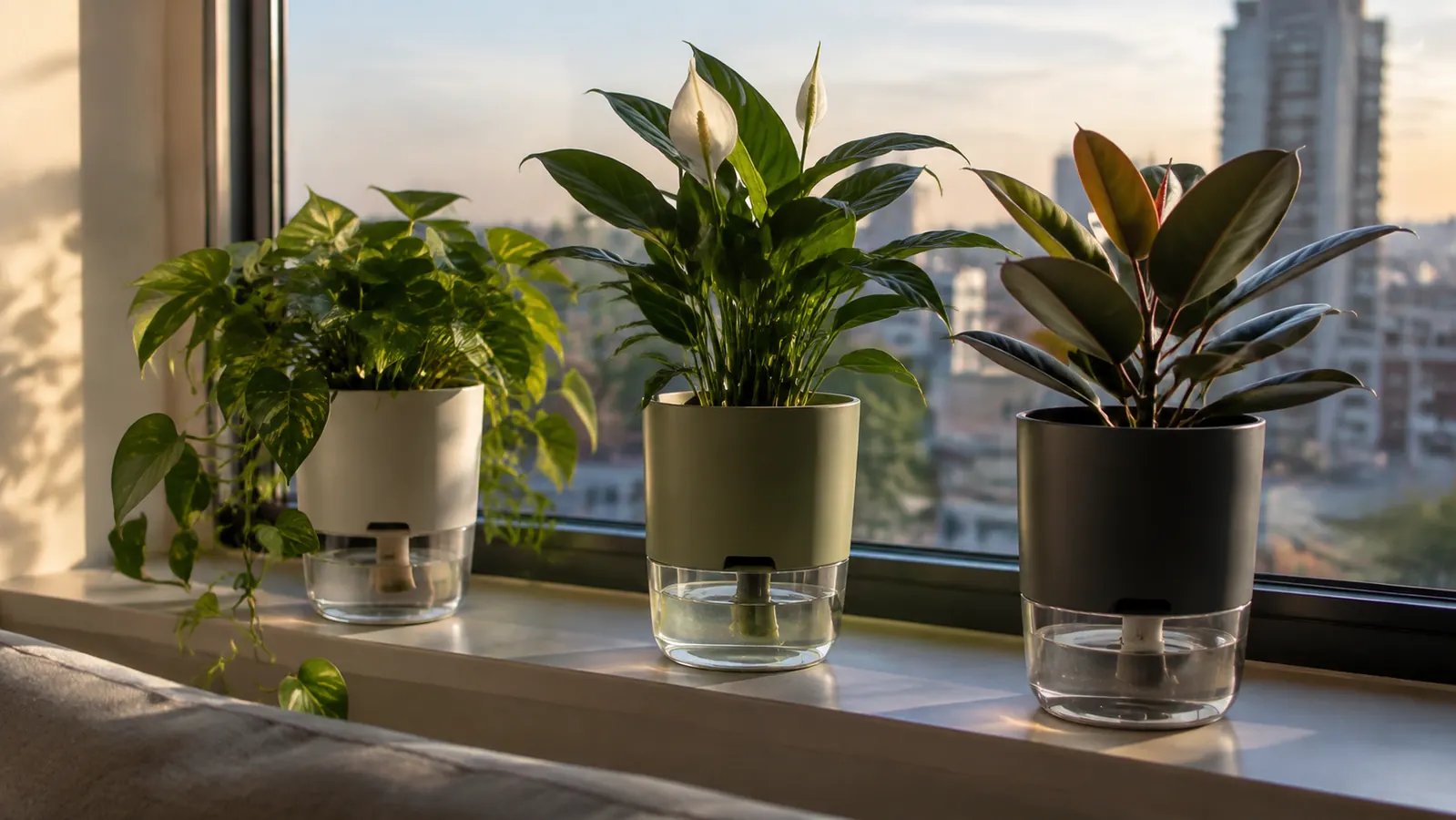
The routine is the whole trick. I still do my plant round on Sunday mornings, but it is a different job now. Instead of deciding whether each of my 31 plants needs water, I walk through and check the indicators. The ones that read low get the reservoir topped up. The whole round takes about ten minutes. It used to take closer to an hour, and most of that hour was me trying to remember when I had last watered anything. And I do it in my slippers, before the coffee is done.
The change that matters is that the question went from did I water this, to is the reservoir low. One is a memory test you will fail on a busy week. The other is a look at a little marker you can answer in a second. That is why these pots work for me where my own memory did not. They turned plant care from a test of recall into a test of observation, and observation is a skill I actually have.
Keep the refill bottle somewhere visible, next to where the pots live. If the water is in the way, you will use it. If it is in a cupboard, Sunday will get busy and you will skip it, and you are back where you started. The pots cannot help you if you forget to fill them, so make the filling step impossible to miss.
Step 5: Watch the First Two Weeks and Adjust
No pot knows your apartment, so treat the first two weeks as a settling-in period. Check the indicators more often than you think you need to, maybe every other day. A plant that was rootbound in a tiny nursery pot can drink much faster than the reservoir keeps up, especially in a warm room. You are not looking for problems. You are learning how fast each plant drinks.
Watch the leaves for two signals. Yellowing leaves usually mean too much water, which can happen when the pot is much bigger than the root ball. Drooping leaves that recover within a day of a top-up mean the plant is drinking faster than the pot is delivering. Both are easy to fix once you know which one you are looking at. Move the plant, or top up more often, and give it another week.
The fiddle leaf fig I have kept alive for nine years, Gus, drinks faster than anything else I own. He went into the largest of the three GARDENIX DECOR pots and still needs a top-up by Thursday most weeks. That is fine. The point is that the indicator tells me on Sunday what he will need before he needs it, instead of me guessing on a Tuesday and getting it wrong. The pots did not change how much Gus drinks. They changed how quickly I notice.
What Else Helps
Self-watering pots remove the worst failure mode, but they are not the whole system. The other things that stopped my plants dying were boring and cheap. A moisture meter helped me trust the pots at first, because I did not believe a plant could be fine without me pouring water on it every week. It showed the soil staying evenly moist, and I stopped second-guessing. If you already own one, use it for the first few weeks and then put it away.
Humidity matters too, and here is the honest version: a humidifier is a general-purpose appliance, not a plant tool. I run a small one in winter because forced-air heat dries the apartment out, and my own skin gets the same benefit the plants do. I would not buy one purely for the plants, but if you have one, it helps the same tropical plants that like self-watering pots. It is a nice extra, not a requirement.
Light is the thing nobody wants to hear. A self-watering pot will not fix a plant sitting in a dark corner. My living room window faces east and gets direct sun until about 11am, and the plants that do well live near it. The north-facing bedroom window gets almost no light, and nothing I put there thrives, no matter how well it is watered. Put your self-watering pots in the best light you have and let the reservoir handle the rest. If your only window faces north, choose plants that tolerate low light and do not expect the pot to fix what the light cannot.
The first plant I moved into a GARDENIX DECOR pot stopped drooping within a week, and my Sunday round went from an hour of guessing to ten minutes of checking indicators.
If you take one thing from this, take this: the plants you have are not hard to keep. They are just easy to forget. A reservoir and a little indicator do not make you a better plant keeper. They make you a more consistent one, and consistency is what keeps plants alive.
Three Pots, One Sunday Morning, No More Guesswork
The GARDENIX DECOR three pack covers the plants that need steady moisture, and the water level indicator tells you when to refill. If you have lost a plant to a busy week, this is the fix that actually fits the way you live. Check the current price on Amazon.
Amazon Check Today's Price on Amazon →