
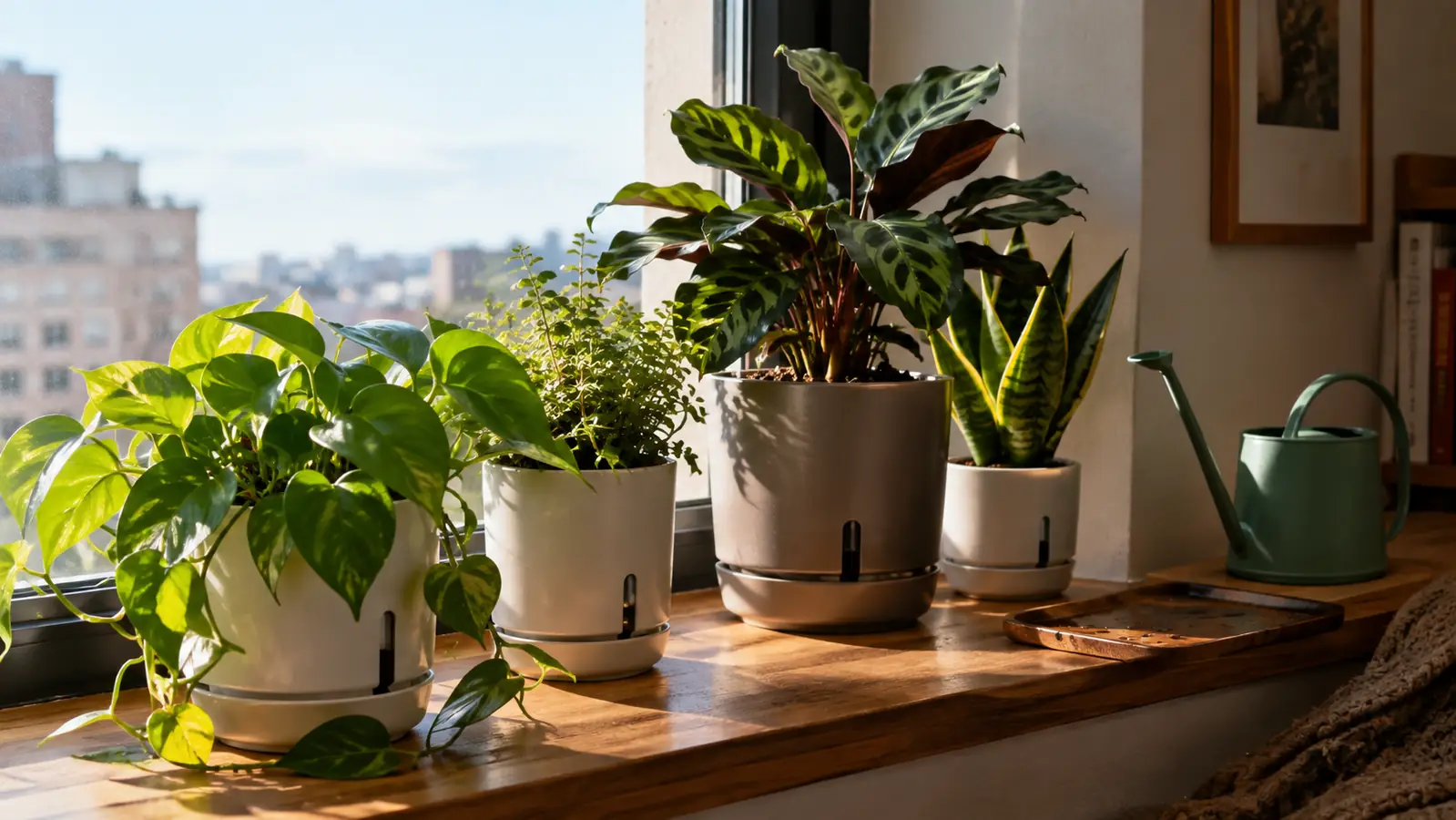
I water my plants on Sunday mornings. That is the whole system, and I built it around the one morning I am guaranteed to be home. I cook most weeknights, I commute by bike, and a weekday watering round has never once actually happened, so at some point I stopped pretending it would. My living room gets good east light until about 11 a.m. My bedroom window faces north and gets none. My apartment runs dry in winter because of the forced-air heat. Everything about my place says my plants should be struggling, and some of them were.
Six months ago I moved three of the thirstiest plants I own into the GARDENIX DECOR self-watering pots, the 3-pack with the water level indicator. I wanted to answer one question: can a plant that needs steady moisture survive a routine that only feeds it once a week? The answer, with two caveats I will get to, is yes. The peace lily stopped its every-other-day drama. The Boston fern, my third attempt at a fern after the maidenhair died, has not crisped once. And I have not watered on a weekday since March.
The Quick Verdict
The water level indicator is the whole story. It turns a self-watering pot from a weekly guess into a two-second check, and after six months it is the reason I trust these with the plants that used to die on me.
Amazon Check Today's Price →The 3-pack that finally made Sunday watering stick
After six months of Sunday-only watering, the GARDENIX DECOR pots are the ones I reach for first. The indicator takes the guesswork out, and the reservoir covers the days I forget.
Amazon Check Today's Price on Amazon →How I've Used It
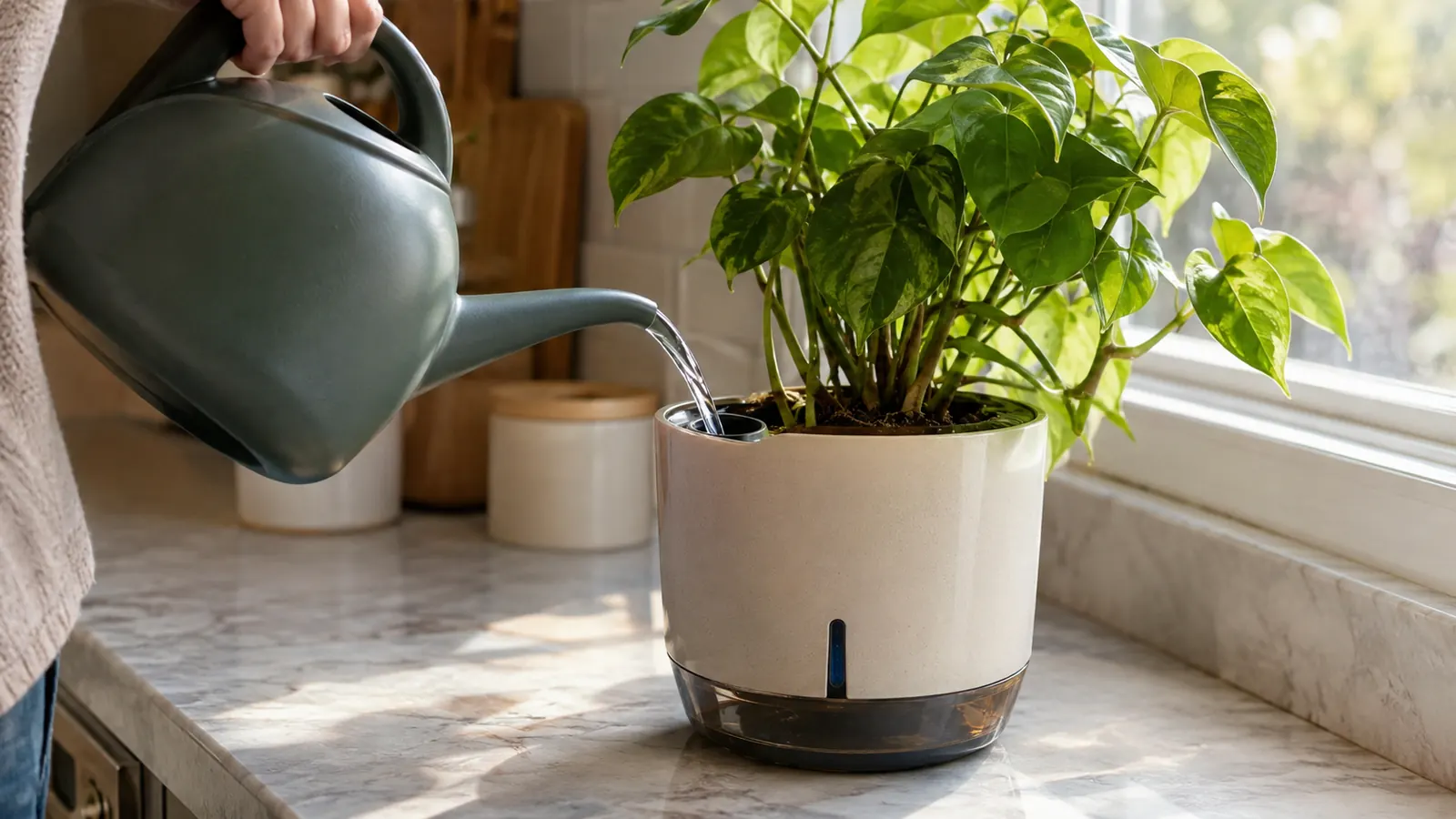
The pack arrived in March, three pots in three sizes. I did not read the instructions first, which is on me, because on the very first fill I poured water into the inner pot instead of the reservoir opening, and it ran straight out of the overflow hole onto my kitchen floor. The second attempt worked. Each pot is two pieces: an inner pot that holds the soil and an outer pot that holds the water. The inner pot sits on small legs above the reservoir, so the roots are never sitting in water. The soil pulls moisture up as it dries, which is how a plant drinks from below.
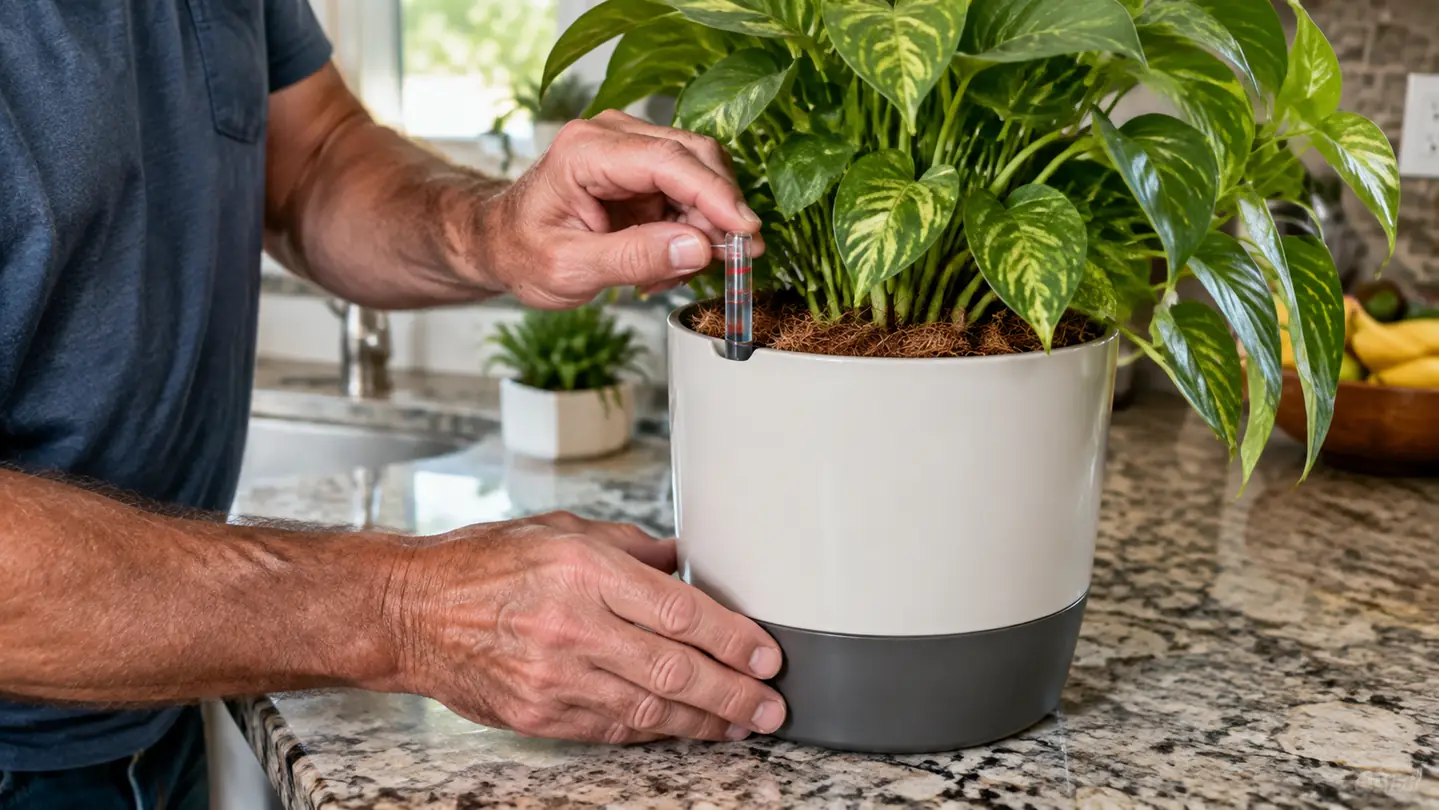
The indicator is a float in a clear tube at the front of the pot. When the reservoir is full, the float sits at the top line. When it is empty, the float sits at the bottom. Between the two are markings, so I can see roughly half full or a quarter full at a glance. On a Sunday, coffee first, then I walk the line of pots and look at the floats. Most weeks only the fern needs a fill. The peace lily's reservoir runs about ten days between fills. The palm in the north window has gone three weeks.
The plants that went in were chosen on purpose. Gus, the fiddle leaf fig I have kept alive for nine years, stayed in his own pot, because you do not move a nine-year-old plant into an experiment. The three that moved were a peace lily that had been drooping every other day no matter what I did, a Boston fern that was my third attempt after the maidenhair fern died, and the parlor palm that lives next to the weak north window.
What the Water Level Indicator Actually Does
The indicator is not a gimmick, and I want to be plain about that, because I assumed it was. I had tried a cheaper self-watering pot a couple of years before, one without any indicator. The reservoir held water, but I could never tell how much, so I either overfilled it until water sat on top of the soil or let it run dry until the plant wilted. The float solves exactly that problem. It turns watering from a guess into a two-second look, and it tells me something a regular pot never does: whether the plant is actually drinking.
Watching the float drop over the course of a week is the most useful information in the whole system. On the fern, the float drops about a quarter of the tube per week, steadily, every week. On the peace lily, it drops faster right after it has put out a new leaf, then slows down. The palm barely moves it. I can see which plants are growing and which are just surviving, and I can catch a problem before the plant shows it. When the peace lily's float stopped dropping in May, the pot told me the roots were not taking up water before the leaves ever drooped. That turned out to be a potbound plant that needed a size up. I would not have caught that with a regular pot until the plant wilted.
There is a small correction period. Because the water comes up from the bottom, the top inch of soil stays dry. The first few weeks I kept pressing my finger into the top of the fern's soil and thinking it needed water. It did not. The roots were drinking from below, and the top layer just stays dry. You learn to ignore it. If the indicator says there is water and the plant looks fine, the plant is fine.
Six Months of Sunday-Only Watering
The peace lily is the clearest win. Before the move, it drooped every other day, sometimes within 48 hours of a watering, and I was forever pouring water on it and hoping. For the first month in the GARDENIX DECOR pot I kept waiting for the other shoe to drop. It never did. It has drooped exactly twice since March, and both times the reservoir was empty. The first time was in June. I had filled it the previous Sunday, the float was at the bottom by Friday, and by Saturday morning every leaf had gone limp in that theatrical peace lily way. I filled the reservoir on a Saturday evening, and by Sunday morning the leaves were standing back up.
The Boston fern is the real test, because ferns are the plant I am worst with. The maidenhair that died before this one did not die of neglect; it died of my watering schedule, which was too much and then too little and then too late. The GARDENIX DECOR pot does not fix my calendar, but it smooths the swings. The fern gets a fill most Sundays and goes about six days between. One frond browned in July during the heat wave, when the apartment hit temperatures the fern did not like, and I trimmed it. That is the whole casualty list in six months.
The palm is the honest counterexample. It drinks so little in that north window that it would probably have been fine in a regular pot with a Sunday watering. It is in the GARDENIX DECOR pot because the pack had three pots and three thirsty plants was exactly what I had, but if I am being straight with you, the palm did not need it. If your plant is a snake plant or a succulent, skip these entirely. They are for plants that want steady moisture, not plants that want to dry out.
Two maintenance notes from the full six months. In August, the float on the fern's pot stuck at the bottom. The plant was fine, but the indicator sat at empty even after a fill. I pulled the tube out, rinsed it under the tap, and put it back, and it has worked since. Two minutes. And around month four, I noticed a thin green film inside the reservoirs. I emptied all three, scrubbed them with a bottle brush, and that was the end of it. Ten minutes of maintenance in six months is not much to ask of a system that waters for you.
The peace lily drooped exactly twice in six months, and both times the reservoir was empty. That is the whole review.
Where the GARDENIX DECOR Pots Struggled
I want to be honest about the caveats, because the easy review is that these are perfect and they are not. The float jamming in August was the clearest fault, and it happened on the pot I rely on most. It was an easy fix, but if I had not noticed it, I would have overwatered the fern trying to solve a problem the plant did not have. Check the floats. That is the one thing you have to do.
The second caveat is the sizes. The three pots in the pack cover small to medium houseplants. The largest of the three fits a plant that came in a standard nursery pot, which is what my peace lily arrived in, with a little room to spare. Anything bigger, and the largest pot in the pack is going to be tight. Gus would not fit in any of them, which is partly why he stayed out of the experiment. If your plant is already in a pot bigger than the largest of these, you are shopping for a single larger self-watering pot, not this pack.
The third caveat is that they are working pots, not showpieces. They look like what they are: functional self-watering containers with a float tube at the front. The one in my living room sits inside a plain woven basket so it does not fight the rest of the room. If you want the pot itself to be the decoration, these are not that. They are the tool that keeps the plant alive, and you dress them however you like.
The Alternatives I Considered
Before I settled on the GARDENIX DECOR pots, I tried the obvious alternatives, and the first one was doing nothing. I already own a moisture meter, and it works, but it only helps on the days I remember to use it. The problem was never knowing when to water. It was that I was not going to be home on a Tuesday to do it. A moisture meter tells you the soil is dry. It does not water the plant while you are at work.
The second alternative was a cheaper self-watering pot without an indicator, which I had already tried and already failed at. The reservoir held water, but I could never tell how much was in it, so the system collapsed into the same guessing game I was trying to escape. That experience is why the indicator on these is not a nice-to-have. It is the feature that makes the whole system work. Without it, a self-watering pot is just a pot with a hidden tank.
If you are weighing these against the standard pots you already own, I have a full comparison of the two approaches that walks through the tradeoffs in more detail. And if you live in an apartment, there are reasons self-watering pots make sense that have nothing to do with plant care: they survive a long weekend away, they keep the soil from drying out during a heat wave, and they stop the weekly mess that a watering round leaves on the floor.
What I Liked
- Water level indicator shows at a glance whether the reservoir needs filling
- Peace lily and fern both went six months with Sunday-only watering
- Reservoir keeps roots damp without leaving them sitting in water
- Ten minutes of cleaning in six months, and that was the only upkeep
- Three sizes in the pack cover most small to medium houseplants
- Overflow hole makes it hard to overfill once you learn where the fill opening is
Where It Falls Short
- Float jammed on one pot in month five; easy fix, but check yours
- Top inch of soil stays dry, which takes a few weeks to trust
- Working pots, not decor; I hide the living room one in a basket
- Largest pot is too small for a big plant like my fiddle leaf fig
Who This Is For
These pots are for the person who waters on Sundays and then leaves the house for the rest of the week. If you commute, if you cook weeknights, if you have ever stood over a drooping plant on a Thursday and thought, I knew I should have watered it before work, these are for you. They are also for the person who has killed a plant from overwatering. The reservoir holds a set amount, and the roots sit above the water line, so you cannot drown the plant the way you can with a regular pot and a heavy hand.
They are for apartment dwellers, full stop. No balcony, no yard, one good window, dry forced-air heat in winter. I have the longer list of reasons in a separate article, but the short version is that a self-watering pot is a buffer. It smooths the gap between what the plant needs and what your schedule can actually deliver. If that gap is the reason your plants keep dying, this is the fix.
Who Should Skip It
Skip these if your plants want to dry out between waterings. Succulents, snake plants, most cacti: they do not want a reservoir at their feet, and a self-watering pot will keep their soil damp in a way they hate. The palm in my north window barely drinks, and it did not need the system. Neither does a pothos that is happy with whatever it gets.
Also skip them if you want the pot to be the decor. These are working pots, and they look like it. I put the living room one inside a woven basket, and you will probably end up doing something similar. And if your plants are already in large pots, the sizes in this 3-pack will not fit them. For a big plant like my fiddle leaf fig, you are looking at a single larger self-watering pot instead.
Six months of Sunday-only watering, and the plants survived
The GARDENIX DECOR 3-pack is the closest thing to a set-and-forget system I have found for thirsty houseplants, with the indicator doing the remembering for me.
Amazon Check Today's Price on Amazon →