
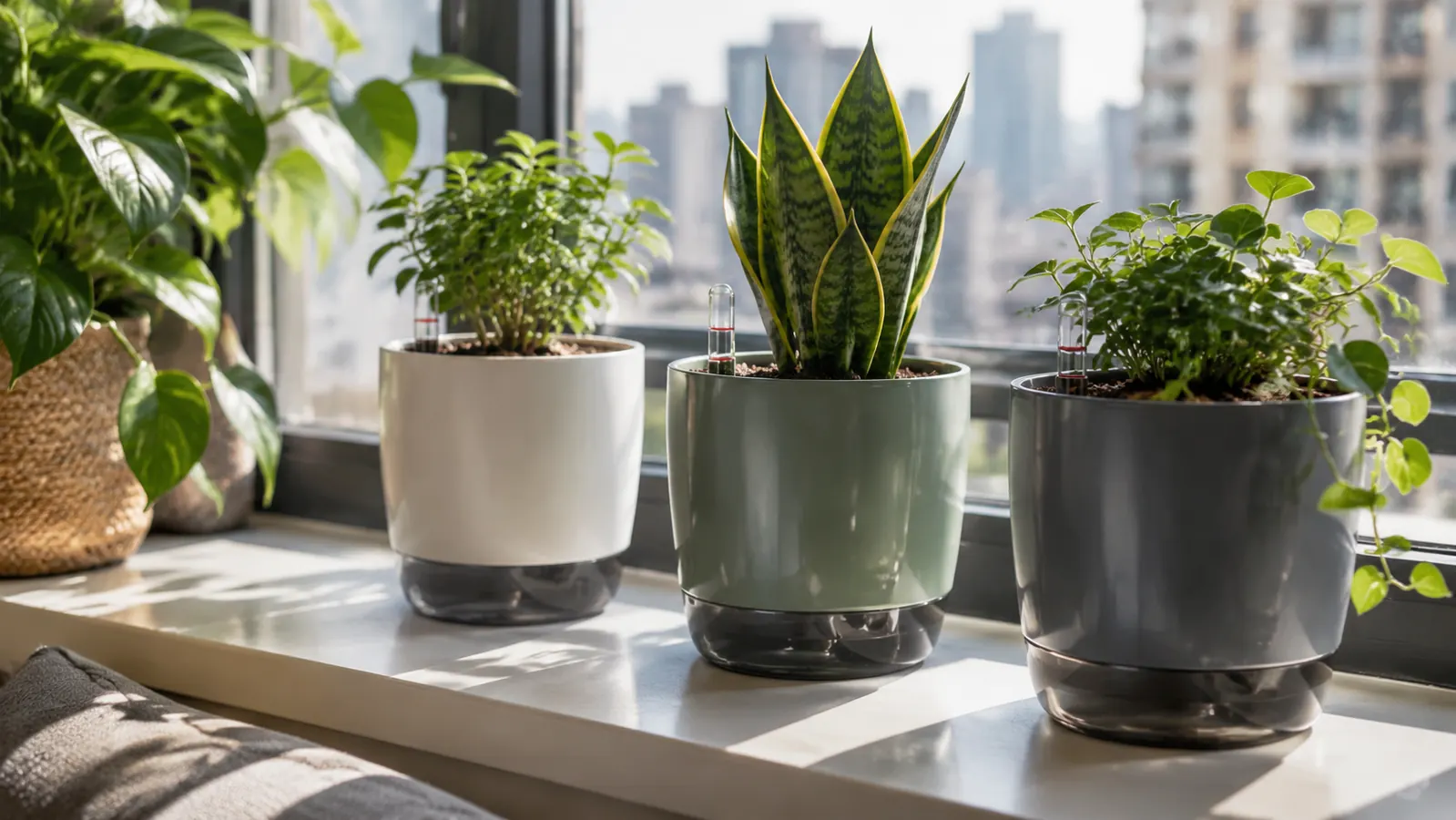
Last February I finally admitted what was killing my plants. It wasn't the light, and it wasn't the dry air from the forced-air heat. It was me. I watered on Sunday mornings, like I do everything else in my third-floor walk-up, and by Thursday the soil in half my pots was dust while the other half sat soggy. My string of pearls was already gone by then. The two calatheas followed in March. When I looked at the maidenhair fern going the same way, I bought a three-pack of GARDENIX DECOR self-watering pots with water level indicators, mostly out of desperation. Ten months later, that is the single best plant-related purchase I have made as an apartment keeper. Here are the ten reasons it works, in the order I noticed them.
I want to be clear about what these pots are not. They are not a license to ignore a plant for a month. They are a buffer between my unreliable weekday schedule and the plant's actual needs.
The Pot That Fixed My Sunday Watering Problem
A self-watering pot with a water level indicator takes the guesswork out of the one chore I kept failing. GARDENIX DECOR's three-pack covers the plants most likely to suffer first.
Amazon Check Today's Price on Amazon →It waters from the bottom, which is where the roots live
When I water from the top, the top inch of soil gets soaked and the water races down the inside of the pot, out the drainage hole, and onto the saucer before the middle of the root ball ever sees it. A self-watering pot pulls water up from the reservoir through the soil, so the roots reach down and drink at their own pace. That matters in an apartment because my pots sit on a radiator cover and a painted sill, places where runoff is a problem. The GARDENIX DECOR pots have a wicking action I can feel when I lift them: heavier after a few hours, with a moist root zone and a dry surface.
The water level indicator tells me the truth I used to guess at
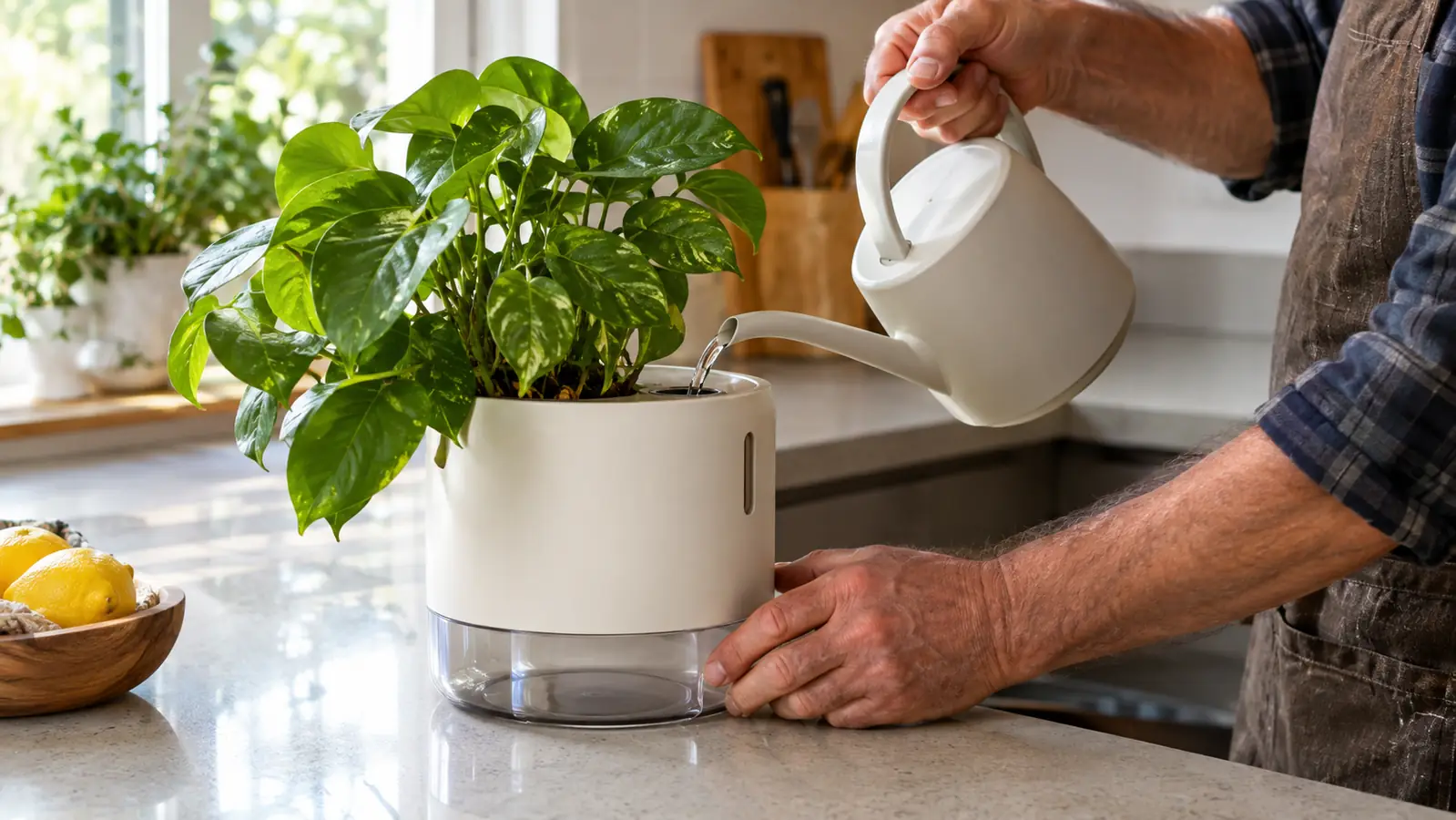
The clearest win is the little float that sits in the reservoir. I look at it on Thursday night, see the marker in the lower third, and know I can wait until Sunday. Before, I would poke a finger into the soil, decide it felt damp, then realize a week later that the bottom half was bone dry. The indicator costs nothing to read and it has saved at least two plants that I can name. One is a tradescantia that dropped leaves every time I overwatered it. It has not dropped a leaf since I moved it into one of these pots.
It forgives a missed week without drowning the roots
The week I came down with a cold in October, I did not water anything. I did not even look at the plants until Wednesday. In a regular pot, a thirsty plant either crisps up or gets a flood the moment I remember. Here, the reservoir held enough water for the plant to drink slowly, and the soil never went from desert to swamp. The plant looked fine, not dramatic, not dying. That is the whole job: to smooth out my worst week without making the plant pay for it later.
It makes a weak east window work harder
My living room window gets direct sun until about 11am, then bright indirect light for the rest of the day. That is not a lot. But the pots keep the root zone consistently moist, which means the plant can use every bit of that light instead of spending energy recovering from dry spells. I noticed it most with a calathea, the kind I had already killed twice. In this pot it put up three new leaves over the summer. I am not going to claim the pot fixed the light. It just made the light I had enough.
It keeps fungus gnats from turning my kitchen into their nursery
Fungus gnats breed in constantly damp topsoil. Top-watering keeps the top inch wet, which is exactly what they want. Because these pots pull water from below, the surface stays dry enough that the gnats stopped showing up around the base of the plants. I used to see a few every time I moved a pot. Now I see one maybe every couple of weeks, and it is usually near the sink, not the plants. I did not buy these pots for pest control. It turned out to be a free side effect.
It cut my Sunday watering round from an hour to twenty minutes
Before, Sunday meant dragging every plant to the kitchen, watering, waiting for the runoff, draining the saucers, and carrying them back. With the GARDENIX DECOR pots, I fill the reservoir through the little opening, check the indicator, and move on. Plants in regular pots still get the full treatment, but the ones in self-watering pots take about twenty minutes for the whole group. On a cold Sunday in February, that is the difference between doing the round and skipping it.
It stops the water stains I used to scrub off the radiator cover
My radiator cover is painted wood, and every time I overwatered a pot, a ring of dust and mineral residue dried on the paint. I spent a whole Saturday morning last spring scrubbing those marks with vinegar. Since the self-watering pots hold the excess in the reservoir instead of letting it run out the bottom, the cover has stayed clean. That sounds like a small thing, but in a one-bedroom apartment, the surfaces you can see matter. One less chore is one less reason to resent the plants.
It gives Gus, my nine-year-old fiddle leaf fig, the steady drink he asks for
Gus is the oldest plant I own, and he is dramatic. If I underwater him, he drops a lower leaf. If I overwater him, he drops a lower leaf. He has been in a self-watering pot since April and he has not dropped a single leaf, which for a fiddle leaf fig in a dry Portland apartment is practically a victory parade. The reservoir holds enough that I can go a full week without touching him, and the indicator tells me when he actually needs attention instead of when I think he might.
It lets me take a weekend away without hiring a plant sitter
Last summer I went to the coast for four days. I filled the reservoirs before I left, closed the blinds, and came home to plants that looked exactly the way I left them. Before these pots, a four-day trip meant asking a neighbor to come up three flights of stairs and water things, or coming home to a crispy fern. The GARDENIX DECOR reservoirs are generous enough for a long weekend, and that independence is worth more than any feature I can list.
It changed how I think about watering, which is the real fix
The pot did not make me a better plant keeper overnight. It made me stop treating watering as a moral test. I used to think I was failing because I did not enjoy the chore or remember it reliably. Now I check the indicators on Sunday, top up the reservoirs, and move on with my day. The plants are healthier because the system is forgiving. That is the honest version: the tool did not change my character, it changed the conditions. That is enough.
What I'd Skip
I would skip these pots for anything that needs to dry out completely between waterings. My jade plant and the cactus on the bookshelf stay in their regular terracotta pots, because keeping the soil moist all the time would rot them. I would also skip them if you have a plant that is already sitting in waterlogged soil; fix the drainage problem first, then move it. And I would skip the idea that one product fixes every plant. The reservoir needs cleaning every few months or the waterline gets a scummy ring. It is a better system, not a perfect one.
Ten months after I bought them, the only plants I have lost are the ones I never moved into a self-watering pot.
A Three-Pack That Earned a Permanent Spot on My Windowsill
If your plants are dying from your schedule, not your intentions, this is the fix. GARDENIX DECOR's self-watering pots with indicators are the tool I recommend to anyone in an apartment.
Amazon Check Today's Price on Amazon →