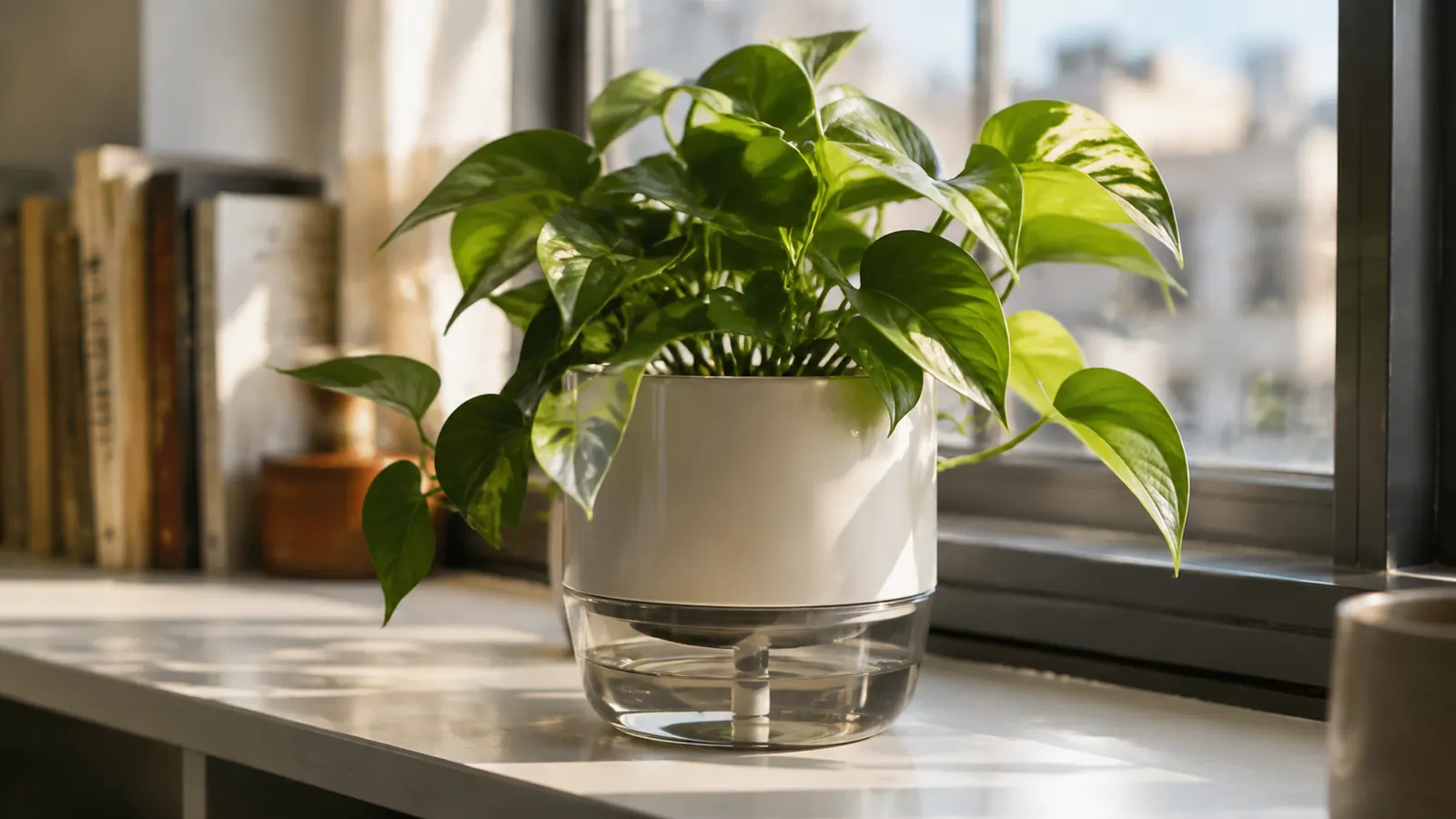
Last spring I went to visit my sister for ten days. Before I left, I set up the three self-watering pots from GARDENIX DECOR, filled the reservoirs until the water level indicators floated to the top, and put my fiddle leaf fig, Gus, in the largest one. When I came home, the soil was still slightly damp and Gus had dropped exactly one leaf. That was the day I stopped thinking of self-watering pots as a gadget for people who travel and started thinking of them as a backup plan for the weeks when life gets loud.
I am not a plant influencer and I do not have a greenhouse. I keep 31 houseplants in a two-room apartment in Portland, with one good east-facing window and a forced-air heating system that turns the air to dust every winter. I water on Sunday mornings because I commute by bike and cook most weeknights, which means my good intentions about watering whenever I notice last about two days. So this review is not a test of whether these pots can replace a person. It is a test of whether they can cover for me when I fall behind, and I have now used them for six months, through a missed week, a heat wave, and a very dry January.
The Quick Verdict
The GARDENIX DECOR three-pack is the best safety net I have found for a busy indoor plant routine. The water level indicator is optimistic, and the smallest pot is shallow, but if you use them as a backup rather than a babysitter, they earn their shelf space.
Amazon Check Today's Price →The pots that survived my ten-day absence
See today's price on Amazon and decide if they deserve a spot on your windowsill. I bought mine for the same reason you are thinking about buying yours.
Amazon Check Today's Price on Amazon →How I've Used Them
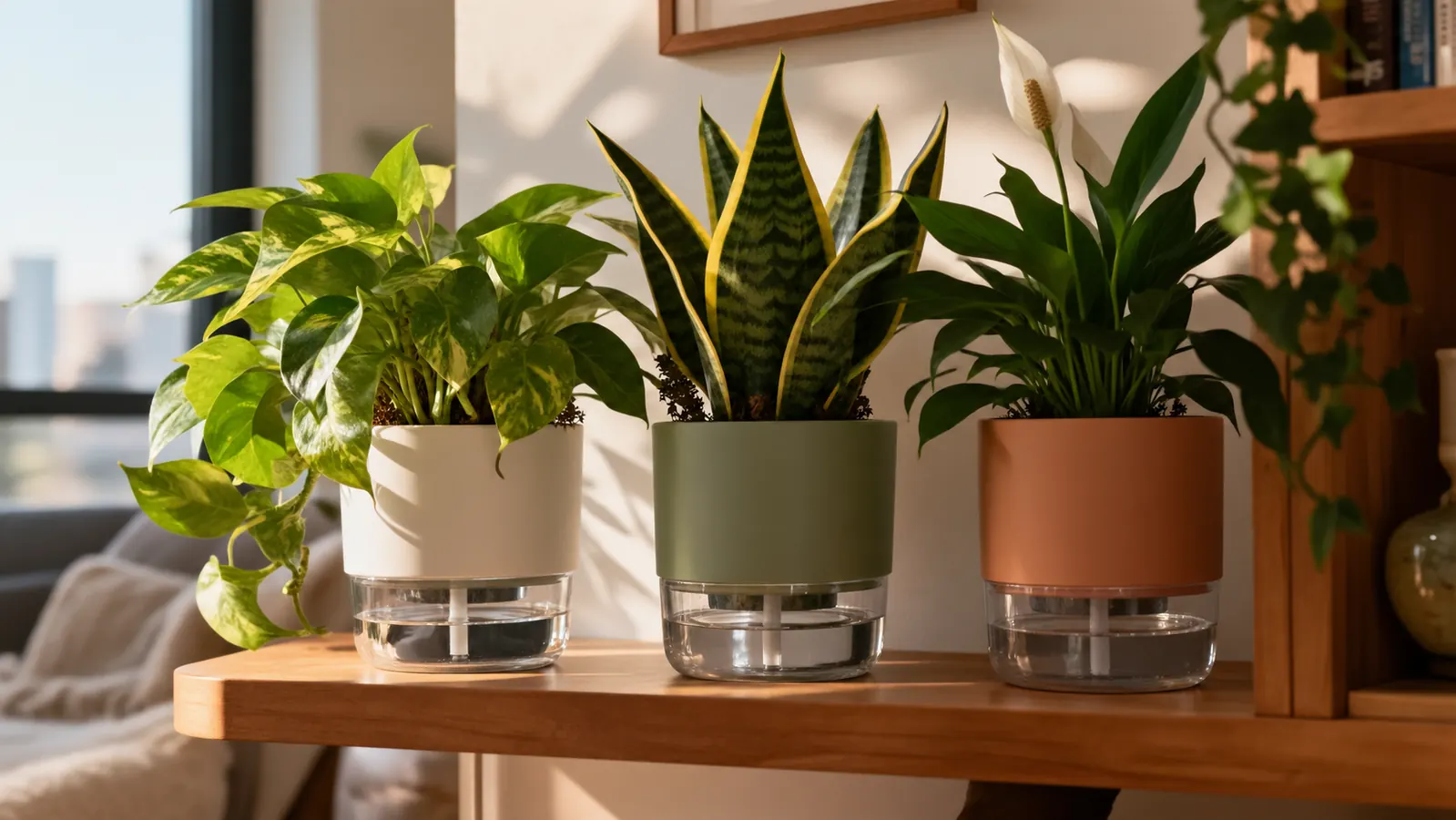
I started with three pots because the set comes as a three-pack. I put a spider plant in one, a pothos cutting that had been rooting in water in another, and Gus, my fiddle leaf fig, in the third. The pots live in different rooms: one on the kitchen counter, one on the living room shelf, and one on the floor next to the east window. That way I could see how they behaved in different light and different levels of foot traffic.
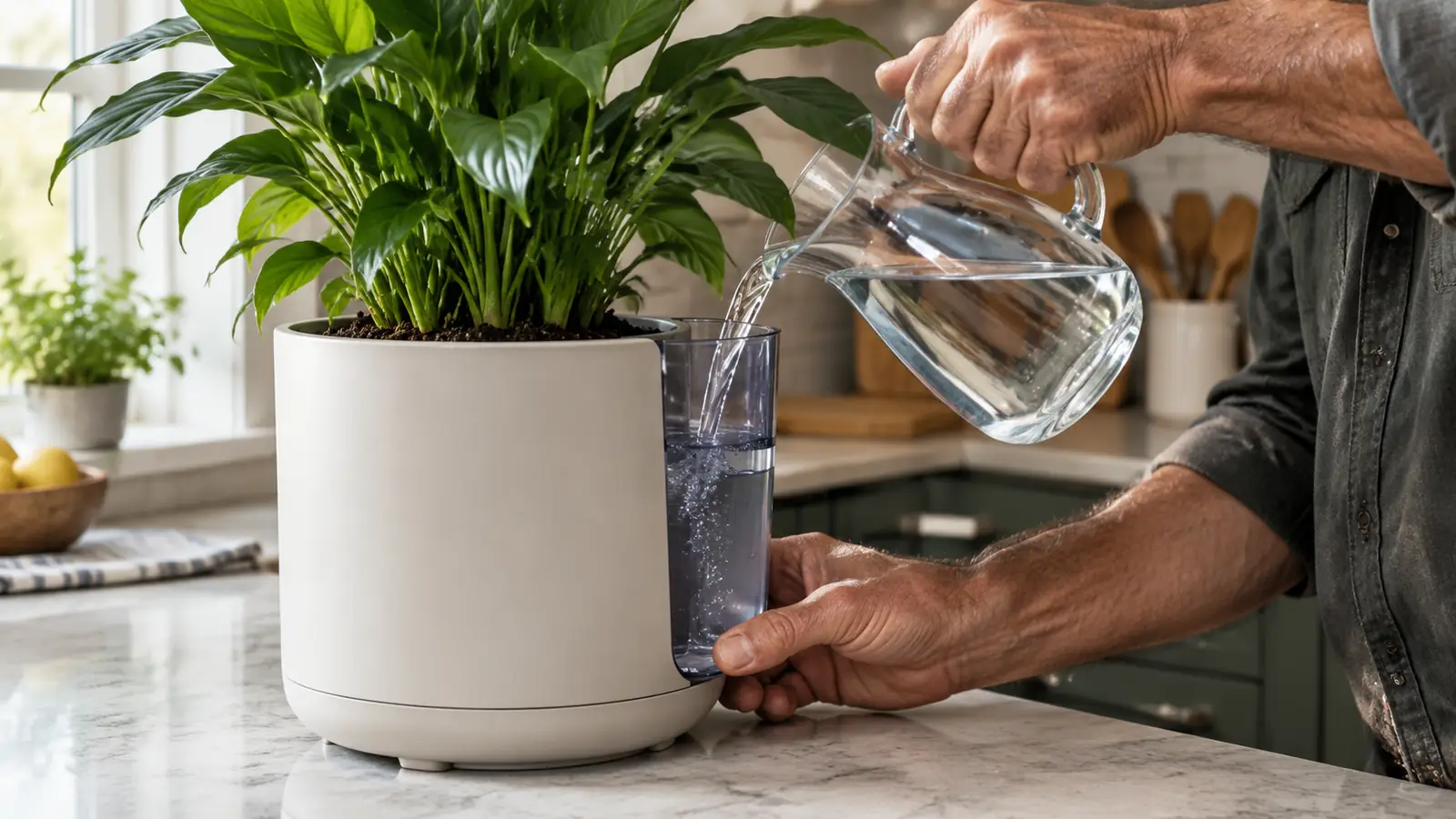
My routine is simple. Every Sunday morning I check the water level indicator on each pot. If it has dropped to the bottom, I fill the reservoir through the little opening at the side. If it is still floating somewhere in the middle, I leave it alone. The whole check takes about ninety seconds. Before these pots, a full watering round meant dragging a watering can around the apartment, tipping it into every saucer, and worrying I had either overwatered or underwatered something.
The first month was not a fair test because I was home every week and still watering on my usual schedule. The pots simply did the same job as regular pots, except the water sat in a reservoir instead of a saucer. The real test came in July, when my sister invited me to stay for ten days and I did not have anyone to water the plants.
In early June I repotted a pothos that had been living in the same nursery pot for two years. I put it in the middle-sized pot and did not water it from the top for three weeks. The reservoir alone kept the soil evenly moist, and the roots grew all the way to the bottom by the end of the month. That was the first time I trusted the wicking system completely.
The Ten Days I Forgot to Water
I filled all three reservoirs the night before I left. I also gave every other plant in the apartment a thorough watering, because I did not trust the self-watering pots enough to leave all 31 plants in their hands. The GARDENIX DECOR pots held Gus, the pothos, and a trailing plant I have never successfully identified, and those three were the ones I expected to be crisped when I got back.
I came home on a Tuesday evening. The apartment smelled like warm dust, and the ferns I had watered before leaving were already drooping. But the three pots with reservoirs still had water in them. The soil in Gus's pot was damp about a finger-knuckle deep. The pothos had put out two new leaves. The trailing plant looked bored, which for a trailing plant is basically thriving. I did not lose a single plant in the self-watering pots, and I only lost one leaf off the fig.
That is the honest version. I did not come home to a jungle. I came home to plants that had coped. If you are expecting self-watering pots to make your plants grow faster or greener, you will be disappointed. If you are expecting them to keep your plants alive while you are away, they did exactly that.
The ten-day trip also taught me that the size of the reservoir matters more than I expected. The largest pot held water for the whole trip. The smallest one was close to empty when I got back. If I had left for two weeks instead of ten days, the smallest pot might not have made it. So I now reserve the smallest pot for plants that do not drink much, and I put anything thirsty in the largest one.
Where They Surprised Me
The biggest surprise was how much water the reservoir actually held. I had assumed the pots would need refilling every three or four days, but the indicator was still above the add-water line after a full week in July. That means the pots are doing what they are supposed to do: letting the plant pull water as it needs it, instead of drowning the roots in a standing puddle.
I was also surprised by how much I stopped worrying. I have killed a string of pearls, two calatheas, and a maidenhair fern, so I am not someone who naturally trusts plants to look after themselves. But after the ten-day trip, I started using the GARDENIX DECOR pots as my default for any plant that seemed to be struggling. The water level indicator takes away the guesswork. I no longer have to poke my finger into the soil and wonder whether I watered on Tuesday or Wednesday.
One more thing that surprised me: the pots are light enough to move. The reservoir adds weight when full, but I can still lift the largest one with one hand. That matters in an apartment where the only good light is on a high shelf and I have to move plants around to clean the windows.
During the August heat wave, the apartment hit 86 degrees for four days straight. The plants by the east window were dropping leaves by the second day. Gus in the GARDENIX DECOR pot looked fine. The reservoir was nearly empty by the end of the week, but the soil never dried out completely. That is the difference between a self-watering pot and a regular pot with a saucer: the reservoir gives the roots a steady supply instead of a sudden flood.
Where They Fall Short
Now the honest part. The water level indicator is not precise. It floats somewhere inside a little window, and on two of the three pots it stuck at the same height for days even after the plant had clearly drunk a lot of water. I have learned to treat it as a rough guide, not a gauge. If you rely on it completely, you will occasionally open the reservoir and find it nearly empty even though the indicator said there was still water.
The smallest pot is also too shallow for anything with serious roots. I tried to put a peace lily in it and the roots hit the bottom almost immediately. The pot is better for small plants, cuttings, and things that do not mind being a little crowded. That is not a dealbreaker, but it is the kind of detail the listing does not tell you.
And the pots are not magic. If you overfill the reservoir, or if the room is so humid that nothing evaporates, you can still end up with soggy soil. I learned this the hard way when I left the reservoir full through a rainy week in November and the pothos started to yellow. The fix is simple: empty the reservoir every few weeks and let the soil dry out a little. But it means these pots still require a human who pays attention.
There is also the question of what happens when the water level indicator sinks all the way. On the smallest pot, the indicator is easy to miss because the window is tiny. I nearly overwatered a succulent by leaving the reservoir full for three weeks straight. Succulents want to dry out completely between waterings, and a self-watering pot will happily keep the soil damp forever. That is not a flaw in the pot, but it is a mismatch with the plant.
How to Get the Most Out of Them
Use them as a backup, not a replacement. I still water my other plants by hand on Sunday mornings, and I still check the soil in the self-watering pots once a week. The pots give me a buffer, not a vacation from plant care. If you travel often, fill the reservoirs before you go, but also move the pots out of direct sun so they do not drink the water too fast.
The other thing that helped me was writing the date on the reservoir with a piece of masking tape. That way I know whether the water has been sitting for two weeks or two days. Stale water is never good for roots. I also give the reservoirs a rinse every month, because algae will grow in any water that sits in the light.
I also learned not to put the pots on a heating vent. In January, the forced air dried out the soil in the regular pots within three days, but the reservoir in the self-watering pots kept working. The water in the reservoir did get cold, and the roots slowed down, so I moved the pots a few feet away from the vent. That one change made a bigger difference than any fertilizer I have tried.
What the Listing Doesn't Tell You
The listing says self-watering, and it is true, but only if you set the pots up the right way. The first time I used them, I filled the reservoir and then poured water into the top of the soil as well, because I did not trust the wicking to do its job. That double watering left the soil waterlogged and the pothos sulked for a week. The pots work best when you let the reservoir do the work and only top-water occasionally to flush out salts.
The listing also does not tell you that the water level indicator can be pushed down by the inner pot when you lift it out. Mine moved on the first week and I spent a confused afternoon thinking the reservoir was empty when it was actually full. Once you know that, it is easy to fix, but it is the kind of thing you only learn by living with the product.
One more thing: the pots are not dishwasher safe, and the inner pot does not have drainage holes. That is normal for self-watering pots, but it means you cannot just run them through the dishwasher after a pest treatment or a fungus gnat outbreak. You have to wipe them out by hand. It is a small annoyance, but it is worth knowing before you buy.
What I Liked
- Reservoir genuinely lasted ten days in summer
- Water level indicator removes most of the guesswork
- Three pots in one set means you can test before buying more
- Light enough to move around an apartment
- Saved my fiddle leaf fig during a missed week
Where It Falls Short
- Water level indicator is imprecise and can stick
- Smallest pot is too shallow for deep-rooted plants
- Can still overwater if you top-water as well
- Reservoir needs occasional cleaning to prevent algae
- Not a substitute for understanding your plant's needs
Ten days away, one dropped leaf. That is the honest result of six months with these pots.
Who This Is For
These pots are for you if you travel, if you work long hours, or if you have ever stood over a plant with a watering can and realized you have no idea when you last watered it. They are for apartment dwellers with one good window and a heating system that dries everything out. They are for people who have killed a maidenhair fern and want a little more margin for error. They will not turn you into a better plant parent overnight, but they will forgive you for being human.
A friend of mine who travels for work every other week bought the same set after seeing mine. She uses them for a snake plant and a ZZ plant, which are already tough, but she says the water level indicator keeps her from overwatering when she is home. That is exactly the kind of person these pots are for.
Who Should Skip It
Skip these pots if you are the kind of person who enjoys watering by hand and checking the soil every day. Skip them if you have mostly large, deep-rooted plants that need more room than the smallest pot in this set provides. And skip them if you are looking for a set-it-and-forget-it solution, because the reservoirs still need to be cleaned, checked, and occasionally emptied. These pots are a safety net, not a robot.
If you are the type of person who already has a reliable watering schedule and plants that thrive on neglect, you do not need these pots. I have friends who water once a month and their plants look fantastic. For them, a self-watering pot is just another thing to clean. This review is written from the perspective of someone who forgets, and if you never forget, you can safely pass.
The honest verdict: worth it if you travel
See today's price on Amazon and read the latest reviews before you decide. These pots earned a permanent spot in my watering routine.
Amazon Check Today's Price on Amazon →