
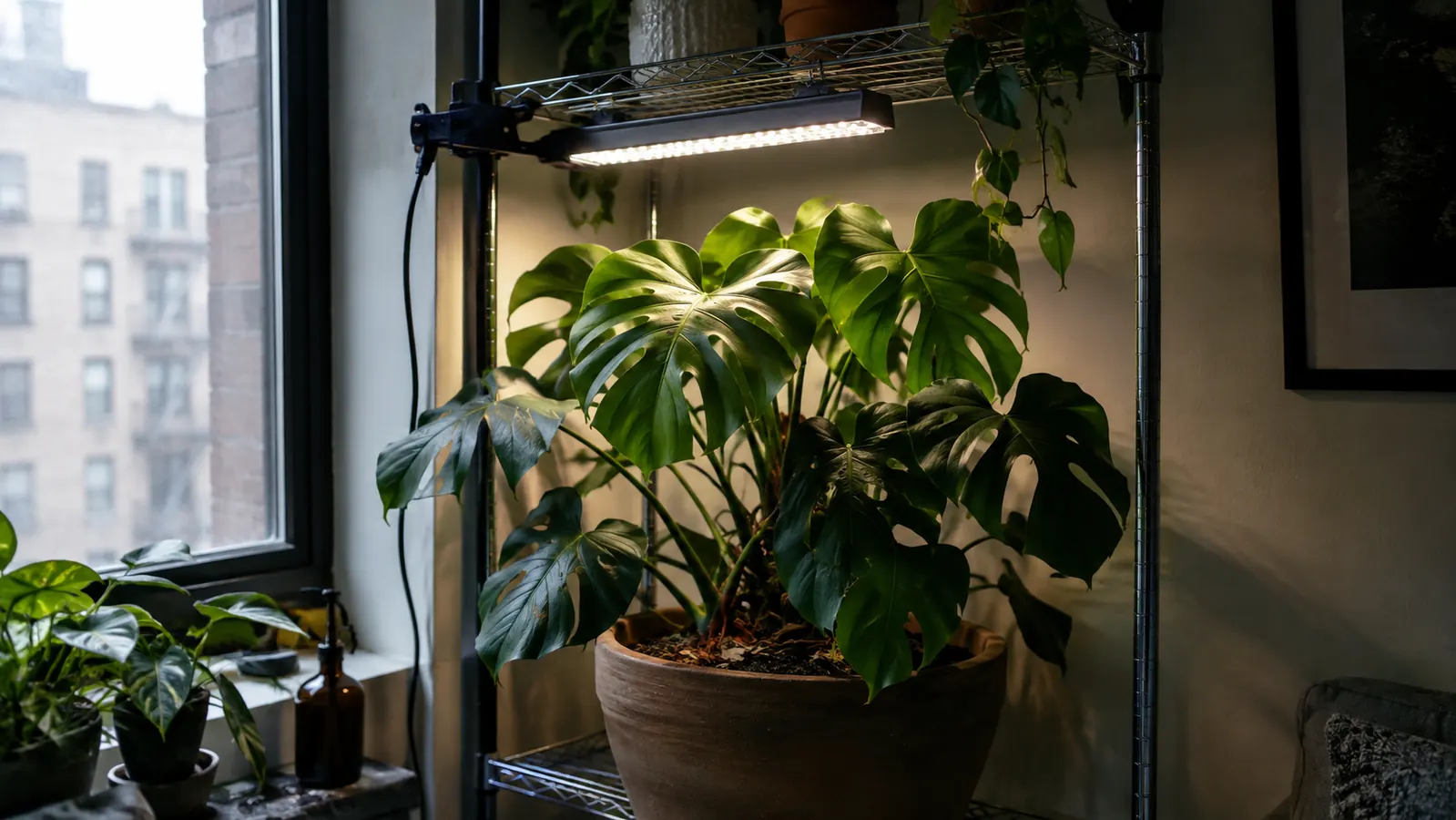
Six months ago I clamped a GooingTop grow light to the shelf above my fiddle leaf fig and told myself this was the year I stopped losing plants. The fig, Gus, has survived nine years in this third-floor walk-up in Portland, which says more about his stubbornness than my skill. The string of pearls, two calatheas, and a maidenhair fern did not survive. They died here, in the winter, in the months when the sun never really reaches my east window. I bought the grow light because I was tired of watching plants arrive healthy in April and look like ghosts by January. I want to tell you plainly what it did, what it did not do, and which of my plants it actually saved.
The Quick Verdict
A solid, affordable workhorse for keeping common houseplants alive through a Portland winter, as long as you accept that it is a supplement, not a replacement for daylight.
Amazon Check Today's Price →Give Your Winter Plants a Fighting Chance
The GooingTop grow light is the one I kept running through my darkest months. Check today's price on Amazon and see if it fits your shelf.
Amazon Check Today's Price on Amazon →How I've Used It
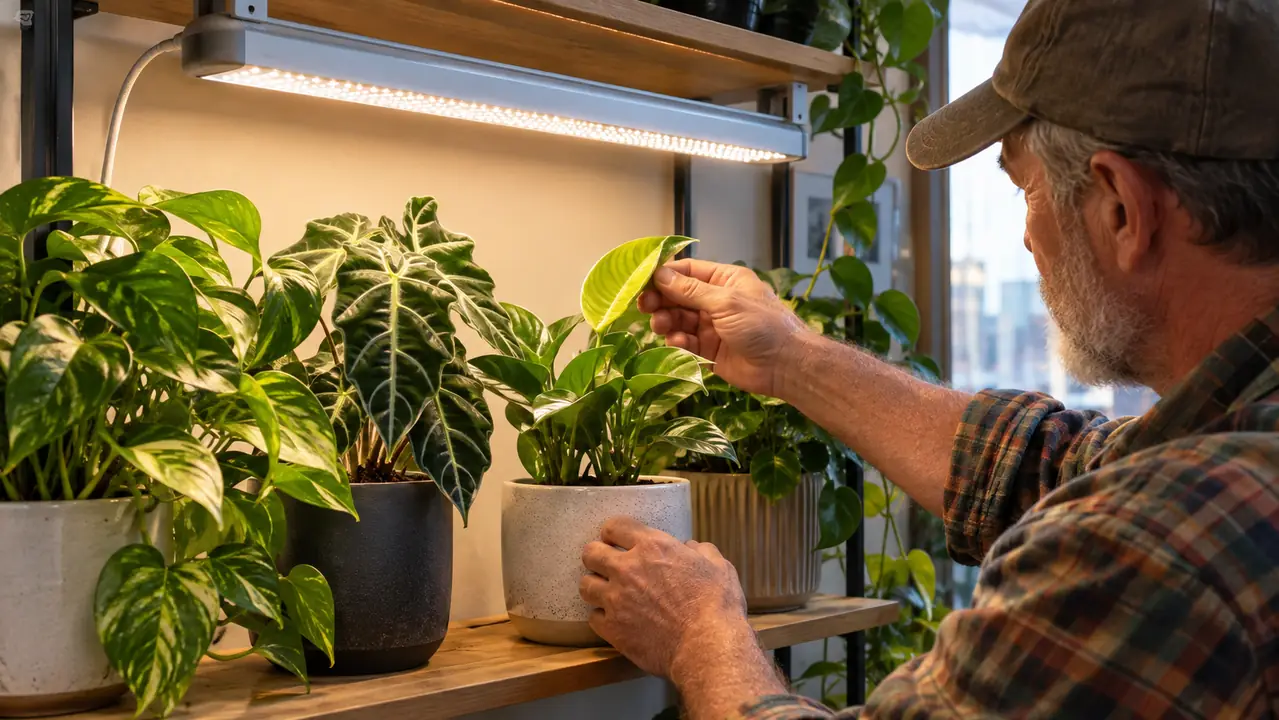
I mounted the GooingTop light on the left side of a wire shelf in the living room, about 14 inches above the pot rims. I ran it on a cheap outlet timer from 7am to 7pm, because I knew I would forget to turn it off and the plants need darkness too. The light has a clamp that grips the shelf edge and an arm that holds its position, so I can aim it where it needs to go. I used it over Gus, a golden pothos, a spider plant, and a young philodendron, all on the same shelf.
My first attempt was in early November. I set the light 24 inches above the plants, following the printed instructions that came in the box, and after two weeks the new growth on the pothos looked pale and stretched. I lowered it to 14 inches and the difference showed within a month. That was the first lesson: distance matters more than the brand. I also learned to keep the light off at night. For three days in December I left it running around the clock because I wanted to see if more hours meant faster growth. The philodendron looked tired, and I read later that plants need a dark period to use the energy they store during the day. I went back to the 7am to 7pm schedule and never strayed again.
The shelf itself is one of those wire storage units, 36 inches wide and 18 inches deep. I put the light at the front edge because that is where the plants sit. The beam spreads enough to cover about two feet of shelf, which sounds generous until you realize my shelf holds four plants. The plants at the edges get noticeably less light than the one in the middle. If I had a wider shelf, I would buy a second light. That is not a complaint about the GooingTop, just a fact about how grow lights work. They have a limited footprint, and you have to respect it.
I also learned to check the light's position every few weeks. The clamp holds firmly, but the arm can drift slightly when I bump it while watering. On January 6 I noticed the light had shifted a couple of inches to the right, and the philodendron on the left had stopped growing. I nudged it back, and within two weeks the plant put out a new leaf. That kind of maintenance is not in the manual, but it is part of using the thing well.
I ran the cord along the back of the shelf with a small zip tie so it would not dangle over the plants. The timer plugs into the wall and the light plugs into the timer. That sounds obvious, but I almost skipped the timer and I am glad I did not. The consistency is what made the difference. A plant that gets light at the same time every day settles into a rhythm, and mine visibly perked up once I stopped moving the light around.
The First Thing Nobody Tells You
A grow light is not a sun. It is a way to give your plants a few extra hours of usable light when the real thing is not available. In my apartment, the east window gets direct sun until about 11am in the summer. By late November, the building across the street blocks it closer to 10:15am, and the light that does come through is weak and gray. The GooingTop light added roughly six hours of light on top of that. It did not turn my living room into a greenhouse, and I never expected it to. It simply kept my plants from sliding into full winter dormancy.
What nobody tells you is that grow lights are not all the same, and the cheap ones are not automatically bad. The GooingTop is a 6000K full spectrum lamp, which sounds like marketing language until you see a plant respond to it. My pothos stopped reaching toward the window and started growing upward, toward the light. That is the difference between a light that is doing something and a light that is just glowing. It also runs cool, which matters in a small apartment where every appliance adds heat in summer.
The other thing nobody tells you is that you need to give the light a job. It is not a decoration. If you place it too far away, it will not hurt anything, but it will not help either. I keep mine close enough that the leaves of the front-row plants are about 8 inches from the lamp. The back-row plants get less, and they grow slower. That is an honest tradeoff, not a flaw.
Another thing I want to be honest about is the light's color. It is cool and white, not purple, which I actually prefer. Some grow lights make a room look like a science experiment. This one just looks like a slightly brighter lamp. I run it in the living room where I read, and it does not bother me. The light is bright enough to read by, which is a side benefit I did not expect.
I also want to be clear about the difference between light intensity and light quality. The GooingTop is not powerful enough to make a plant grow like it would outdoors in June. It is powerful enough to keep a pothos from stretching, to keep a fiddle leaf fig from dropping leaves, and to give cuttings a reason to root. That is the honest ceiling. If you need something that will support a vegetable garden, this is not that. If you need something to get a houseplant through February, it is.
The other thing I will tell you is to start with a cheap timer and a basic light like this before you spend more. I almost bought a fancy system with an app and a scheduling program. I am glad I did not. The GooingTop plus a cheap outlet timer does everything I need. The app would have added complexity, not results. If you outgrow this light, you can always move up later. Starting here is not a compromise.
What It Actually Did
By the second week of December, Gus had put out one new leaf. That may not sound impressive, but he had not produced a single leaf in the previous winter, so it felt like a victory. My golden pothos grew three vines, each about 10 inches long, over the same period. The spider plant, which usually stops making babies in winter, sent up two plantlets by mid-January. The young philodendron added four leaves, though they were smaller than the ones it grew in September. These are not dramatic results, but for a third-floor walk-up with no balcony, they are real.
I kept a notebook, because I wanted to know if the light was worth the shelf space. On December 18 I counted 31 leaves on the pothos. On February 2 there were 38. The spider plant went from 5 to 7 full leaves and the two plantlets grew roots in water on the same shelf. None of this happened fast. It happened the way most plant care happens, slowly and quietly, with a weekly watering and a light that turned on and off like clockwork.
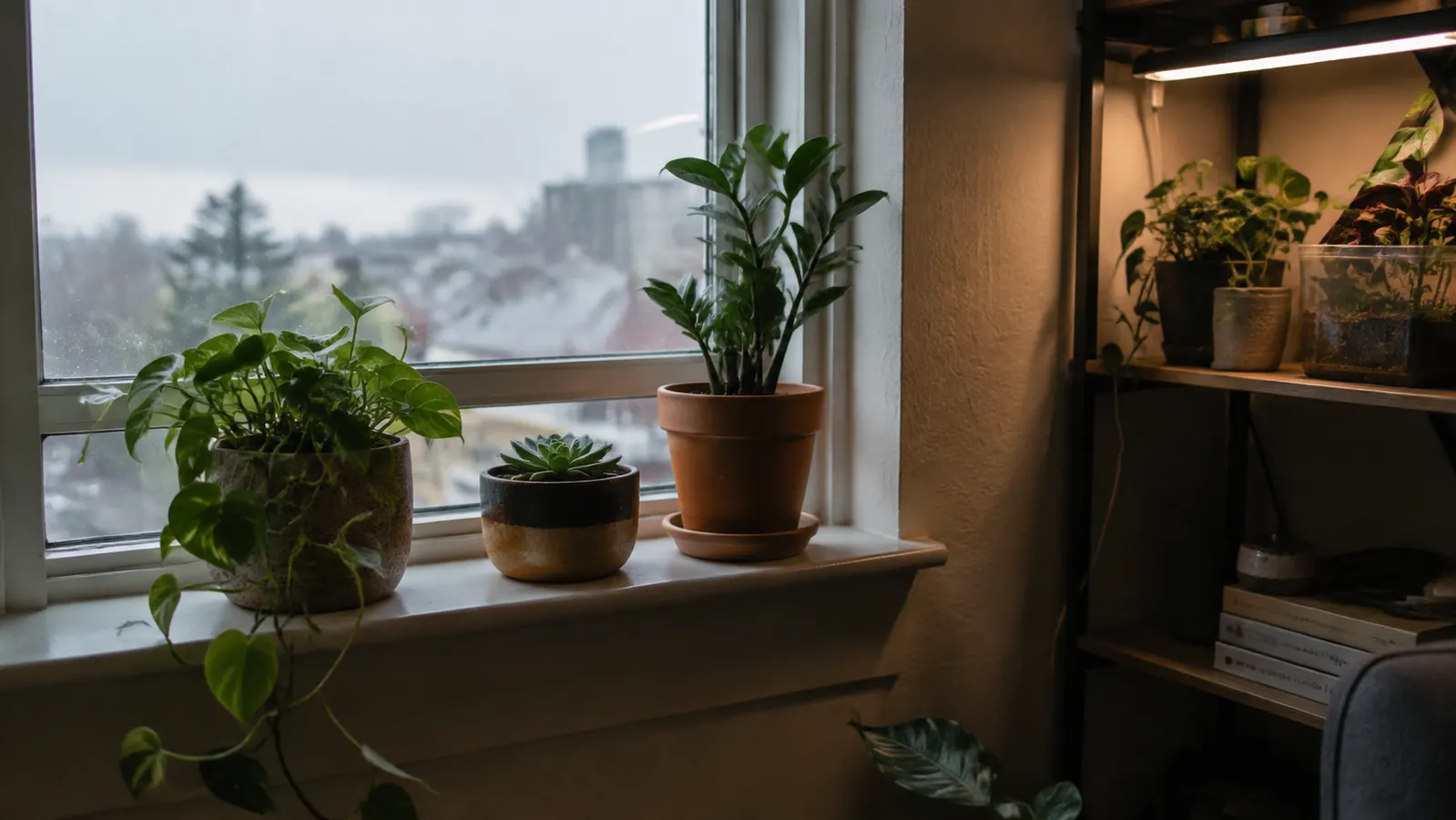
The light also changed how I thought about my north-facing bedroom window. I used to put a plant there and watch it fade. Now I keep a small pot of pothos cuttings on the dresser with the GooingTop light angled toward it, and the cuttings have rooted. It is not a bright room, and the light does not fix that. But it gives the plants enough to survive and slowly grow, which is more than that window ever offered before.
One more specific: my fiddle leaf fig, Gus, is about four feet tall. The new leaf that appeared in December came in at the top, and it has since grown to about six inches long and four inches wide. That is normal for him, but it is also normal for him to do nothing at all between November and March. The fact that he moved at all tells me the light is doing something real. I cannot prove the light caused it, because plants are complicated and I am not a scientist. But I have nine years of history with this plant, and this was his best winter in at least three.
I also moved a small pot of pothos cuttings into the bedroom, under the same light, and they rooted in about three weeks. The same cuttings in the same room, but without the light, took six weeks to root the previous winter. That is not a controlled experiment, but it is good enough for me.
I also noticed that the plants under the light stayed greener through January. The pothos kept its variegation, the spider plant kept its stripes, and Gus kept the deep green he had in October. In previous winters, the same plants went pale and dull by mid-January. That is hard to measure, but it is the difference between a plant that is surviving and a plant that is just waiting for spring.
What It Could Not Save
The light did not save the string of pearls. I know why now. String of pearls needs consistent watering and strong light, and I was doing the opposite. I watered it on Sunday mornings, which meant it sat dry for six days, then got a drink it could not use. The grow light gave it more light, but light cannot fix a watering schedule. The plant was already too far gone by the time I understood the problem.
The calatheas died because of humidity, not light. The forced-air heat in this apartment makes the bedroom dry in winter, and a grow light does nothing for humidity. I moved the calatheas under the GooingTop, watched them look worse, and finally realized they needed a humidifier, not more light. By the time I bought one, it was too late for one of them. The other followed a month later. My maidenhair fern crisped within three weeks despite sitting directly under the light, for the same reason.
These failures are mine, not the light's. I say that because it matters. A grow light is a tool, not a cure. It will not save a plant that is being overwatered, underwatered, or cooked by dry heat. If your plant is dying because of something you are doing wrong, more light will not fix it. It will just give the plant a little more time to show you what the real problem is.
The string of pearls taught me the hardest lesson. I bought it in October, put it under the GooingTop in November, and watched it decline anyway. The leaves were shriveling, which is a sign of underwatering, but I was watering every Sunday. The problem was that the pot was small and the soil was light, so the water ran through and the roots never really drank. I repotted it in a heavier mix in January, but by then most of the strands were gone. The light was doing its job. I was not doing mine.
The calatheas were a different failure. I bought them in November, moved them under the light, and they still crisped at the edges. I tried misting, which did nothing. I tried a pebble tray, which helped a little. By the time I bought a humidifier in February, the first calathea had lost most of its leaves and the second was not far behind. I mention this because if you are reading this with a calathea that looks sad, skip the grow light and buy a humidifier first. The GooingTop is not the answer to dry air.
I do not want to leave you with the impression that the GooingTop is fragile or cheaply made. It has run every day since November without a problem. The clamp still holds, the arm still stays where I put it, and the light output has not dimmed that I can tell. I mention this because a lot of plant tools fall apart after a few months. This one has not. The failures in this review were my failures, not the product's.
What I Liked
- Gave my east window plants several extra hours of usable light through the dark months
- Clamp is easy to position and holds its angle
- The 6000K spectrum seems to support steady growth, not just keep plants alive
- Quiet and cool enough to run near my reading chair
- Timer makes it set-and-forget
Where It Falls Short
- Only covers a small area, so I needed one per shelf
- The included instructions are thin on distance guidance
- It will not fix watering or humidity problems
- The light is not a replacement for a bright window
One new fig leaf by the second week of December, and three pothos vines that each grew about 10 inches. That was the proof I needed.
Who This Is For
Buy this if you live in an apartment with one good window and a few plants you want to keep alive through winter. If you have a pothos, a spider plant, a philodendron, or a fiddle leaf fig that has been slowly declining since November, this light will give them a real boost. It is also good for starting cuttings in early spring, though I would not use it to grow vegetables from seed. It is a maintenance light, not a growing light. That is the best way I can put it.
It is also for people like me who do not have a dedicated plant room. I use this light in a shared living space, and it is unobtrusive enough that I do not mind seeing it every day. The clamp means I can move it to the bedroom when I have cuttings, and back to the living room when the shelf needs it. It is not a beautiful object, but it is not an eyesore either.
Who Should Skip It
Skip it if your plants are already in a bright south-facing room. Skip it if you are trying to grow high-light plants like a jade tree or a citrus tree, because this light is not strong enough for those. And if your problem is dry air, buy a humidifier instead, because no grow light will fix crispy leaves caused by forced-air heat. The GooingTop is a good tool, but it is not the only tool, and it is not the right tool for every problem.
I would also tell you to skip it if you are the kind of person who wants to set up a light and never think about it again. This light needs a little attention. You have to adjust it, check the distance, and keep it clean. Dust settles on the lamp face and cuts the output, so I wipe it with a dry cloth every few weeks. None of that is hard, but it is not zero. If you are not willing to do it, the light will not do you much good.
One more group should skip it: people who already have bright windows. If you are reading this because you want to grow something in a sunny kitchen, you do not need a grow light. Save your money. The GooingTop is for the rest of us, the ones with a third-floor walk-up and a north-facing bedroom and a shelf full of plants that are not getting enough sun.
The Grow Light That Earned Its Spot on My Shelf
After six months, the GooingTop grow light is still running on the same shelf. Check today's price on Amazon.
Amazon Check Today's Price on Amazon →