
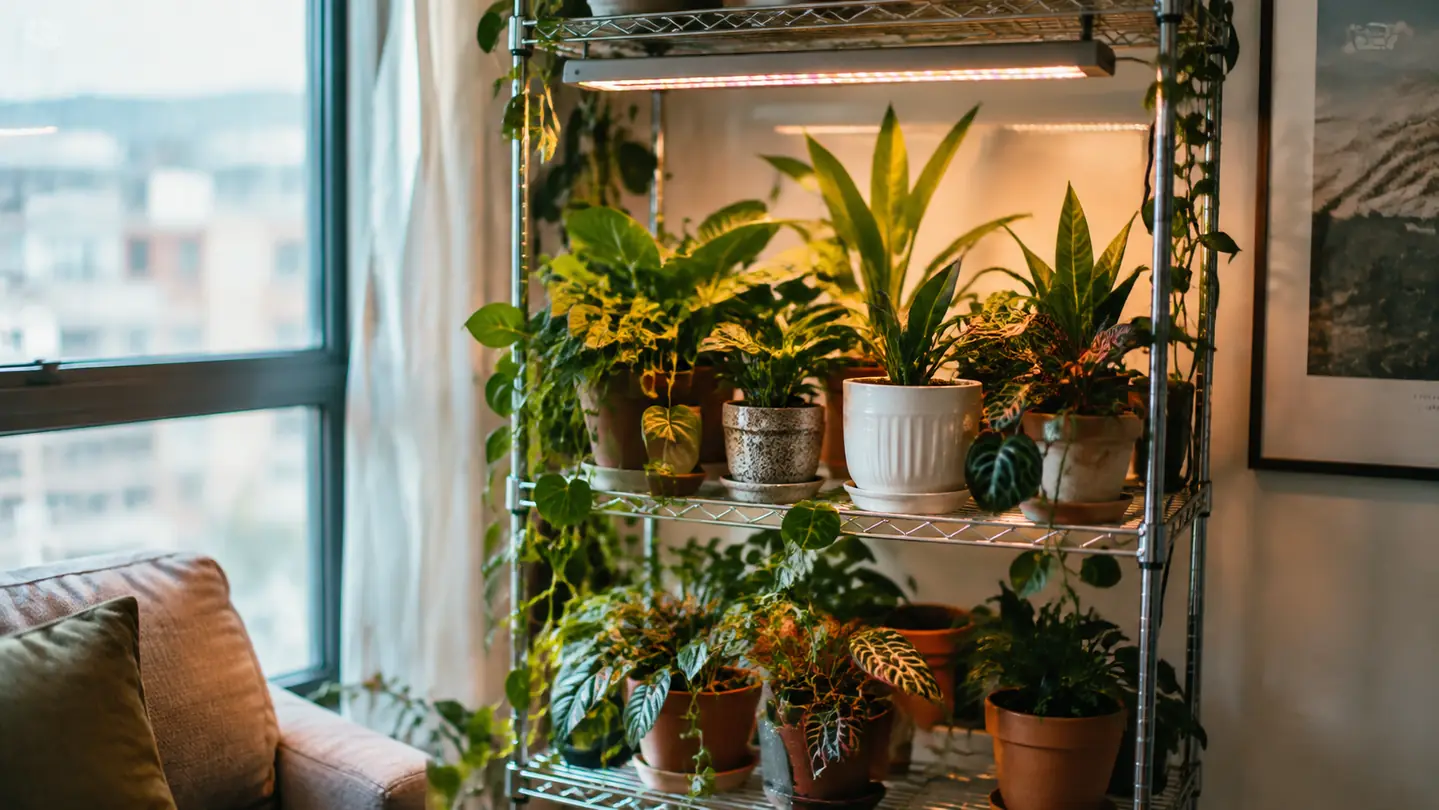
Eight weeks ago I stopped guessing about light. I set up a GooingTop grow light on a wire shelf in my living room, about three feet from my one good east-facing window, and I moved a tray of identical plants to each spot. Same potting mix, same watering schedule, same room temperature. The only difference was the light. I did this because I was tired of watching my plants stretch toward the glass and then lean sideways by November. My apartment is a third-floor walk-up in Portland, Oregon, with no balcony and no yard, and the only window that gets real direct sun is the east one in the living room, and only until about 11am.
The short answer is that the GooingTop grow light grew sturdier, more compact plants over eight weeks, but the sunny window still beat it in a few ways that matter. The window is free, it runs itself, and it gives plants a natural winter rest that some of them clearly want. Neither side won everything. If you are trying to decide whether to buy a grow light or just put your plants in the best window you have, here is exactly how I tested it, what I measured, and where each option earned its place.
GooingTop Grow Light: My Pick for Steady Indoor Light
If you only read one thing: this light kept my cuttings upright and short while the window plants stretched, and the built-in timer meant I never had to remember to switch it off. It is not the light for every plant, but it is the one I would buy again.
Amazon Check Today's Price on Amazon →How I Set Up the Test
On September 6 I took four cuttings each from four different mother plants: pothos, coleus, spider plant, and a small-leaf philodendron. Every cutting had three nodes and roughly the same amount of root. I potted them in the same mix, one part coco coir, one part perlite, one part compost, and watered them all with the same first drink. Then I split them into two groups. Group A went under the GooingTop light, which I clamped to a wire shelf so the LED panel sat about 10 inches above the top leaves. Group B went on the east windowsill, where the glass gets direct sun until 11am and bright indirect light for the rest of the day.
I set the GooingTop light to its 6,000K full-spectrum mode and put it on the built-in timer for 14 hours a day, from 6am to 8pm. The window group got whatever the sky decided to give it, which in Portland in September and October is a mix of clear mornings and long stretches of rain. I watered both groups on Sunday mornings, because that is the only watering day that actually sticks in my schedule. I cook most weeknights and commute by bike, so a weekday watering round never survives contact with real life. Every Friday I measured the stem length of each cutting, counted the leaves, and checked the angle of the newest leaf against a ruler and a phone level.
At the start, both groups looked identical. The first visible difference showed up on day 12, when the window coleus started leaning toward the glass, about 15 degrees off vertical. The grow light coleus stayed straight. By week four, the grow light pothos had leaves that were noticeably wider, and the spacing between leaves was about a third shorter than the window pothos. By week eight, the difference was impossible to miss. The window group was taller, paler, and leaning. The grow light group was shorter, greener, and holding its own weight.
I also measured the light with a cheap lux meter, which is not lab equipment but is useful for comparison. At leaf height, the GooingTop light gave about 18,000 lux at its center and about 12,000 lux at the edges of the shelf. The east windowsill read about 32,000 lux at 9am on a clear day, but that number fell to 9,000 by noon and to 2,000 by 3pm. On an overcast day, the window never got above 8,000 lux. The grow light, by contrast, held its output steady all day. That single number explained the plant behavior better than anything else.
I kept a notebook with the numbers too. The window coleus went from 4 inches to 9 inches tall, while the grow light coleus went from 4 inches to 6.5 inches. The window pothos added 7 new leaves; the grow light pothos added 11. The spider plants were the closest, with both groups putting out runners, but the grow light runners were thicker and had more plantlets. I did not rely on memory for any of this. I wrote it down on Fridays and compared the photos side by side.
| GooingTop Grow Light | Sunny East Window | |
|---|---|---|
| Light consistency | Full-spectrum 6,000K LED on a timer, 14 hours a day, same output in sun or cloud | Direct sun until 11am, then bright indirect light that shifts with weather and season |
| Stem strength | Cuttings stayed upright with short leaf spacing | Coleus leaned 15 degrees toward the glass by day 12 |
| Winter reliability | Same output in December as in September, no cloud cover involved | Portland winter days are short and dim; the window loses hours of usable light |
| Running cost | Uses electricity, though my bill showed no noticeable change | Free, always on, no plug required |
| Natural rest | Keeps plants actively growing all year, which not every plant wants | Gives plants a natural winter slowdown that helps some species flower later |
| Best for | Starting cuttings, keeping plants compact, steady year-round growth | Hardy plants that tolerate lower light and people who want zero gear |
Where GooingTop Wins
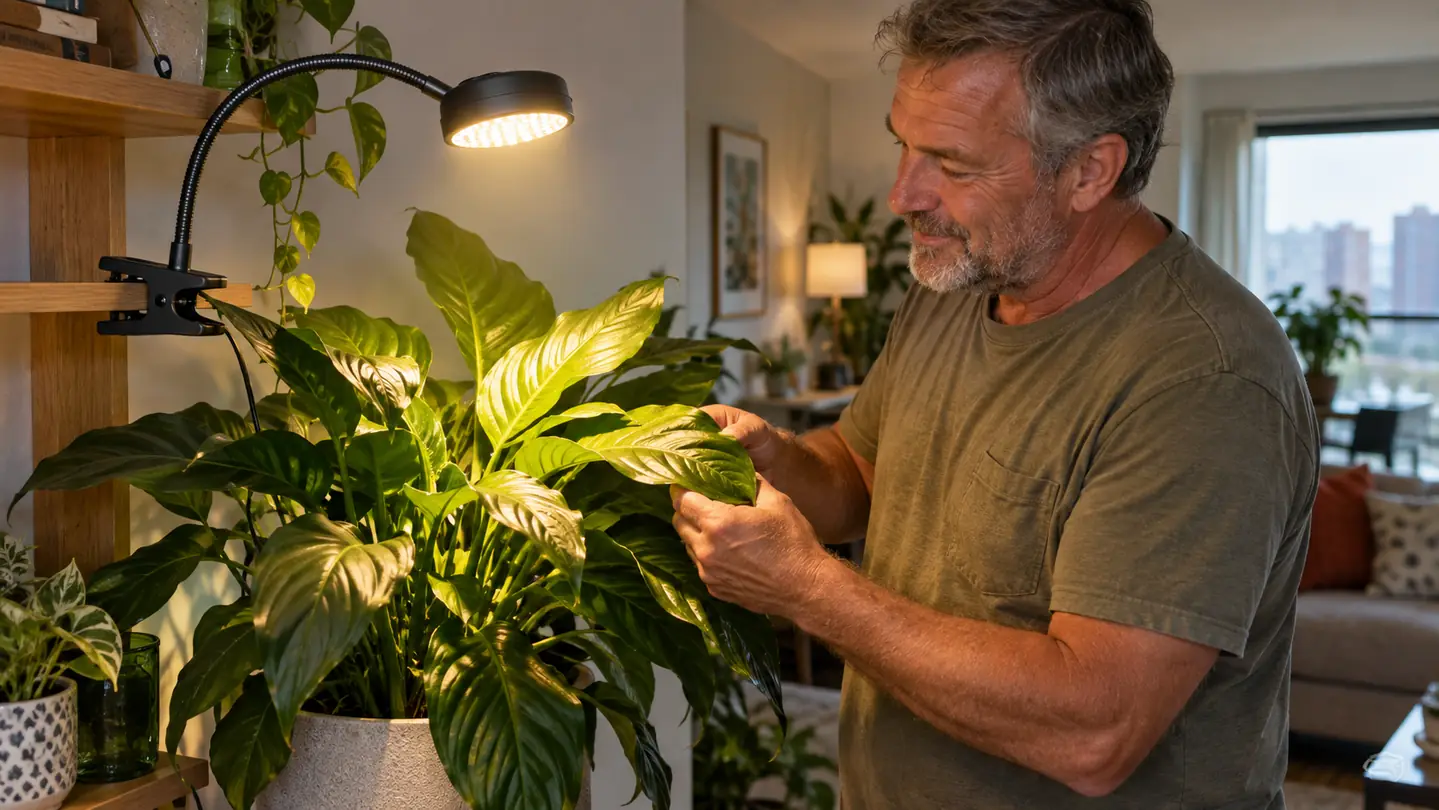
The biggest win was consistency. A window is not a setting, it is a weather pattern. The GooingTop light came on at 6am and switched off at 8pm no matter what was happening outside. It did not care that the sun rose later in October or that a week of rain turned Portland gray. My plants got the same 14 hours of light every day, and that showed up in the leaf spacing. Short internode length is the sign of a plant that is getting enough light. When light is scarce, the plant stretches to find it, and the gaps between leaves get long. Under the grow light, those gaps stayed short.
The second win was compact growth. The grow light coleus stayed close to its starting height, with stems thick enough to hold the leaves up. The window coleus stretched to almost twice the height and started to flop over the edge of the pot. That matters because a stretched plant is a weak plant. It cannot support its own weight, and it is more likely to break when you move it or water it. I also noticed the grow light pothos had wider leaves. I measured the biggest leaf on each side in week six: the grow light pothos leaf was 3.8 inches across, and the window pothos leaf was 2.9 inches. Same mother plant, same soil, same water. The only difference was the light.
The color difference showed up in week five. The grow light leaves were a uniform green from stem to tip, while the window leaves were slightly paler at the base and darker at the edges. I do not have a chlorophyll meter, so I am not going to pretend I measured that scientifically. But the photos from the same phone camera, same distance, same time of day, show it clearly. The grow light plants looked like they had been fed, even though both groups got the same water and no fertilizer during the test.
The built-in timer deserves its own mention. I have killed plants before, including a string of pearls, two calatheas, and a maidenhair fern, usually by either overwatering or forgetting to move them to better light. With the GooingTop light, I set the timer once and forgot about it. The light turned itself on and off, and I did not have to remember anything. That sounds small, but for someone with a commute and a cooking habit, it is the difference between a light that gets used and a light that sits in a closet.
The window made my plants taller. The grow light made them stronger. Taller is not always better.
Where the Sunny Window Wins
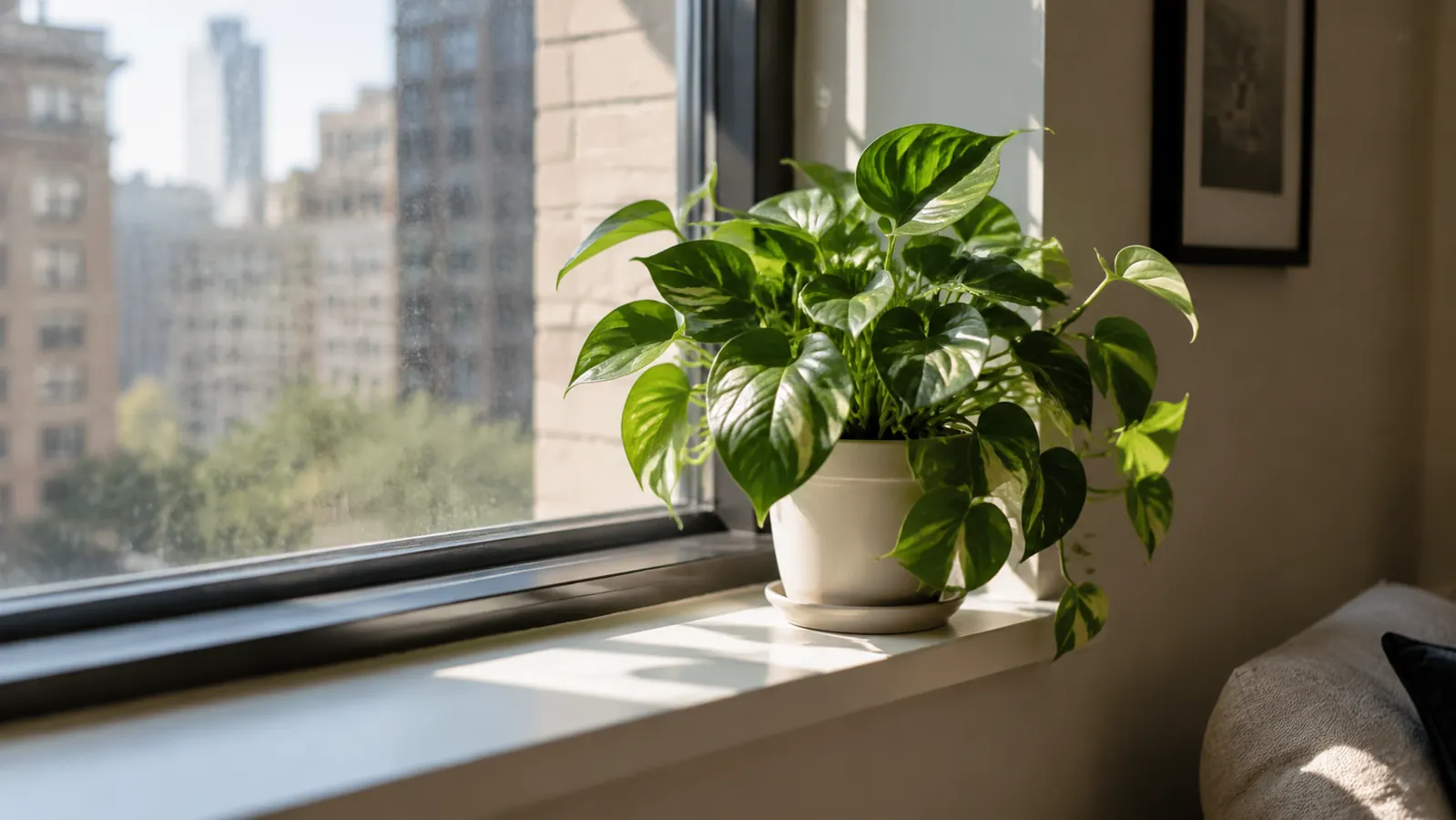
I am not going to tell you the window lost everything, because it did not. For one thing, it costs nothing to run, and it does not need a timer, a clamp, or a power strip. For another, some of my plants genuinely did fine there. The spider plants on the window side grew more slowly, but their leaves stayed a deeper green, and they did not show the slight red edge that appeared on the grow light coleus. Natural light is a full spectrum in a way that even a good LED is not, and some plants notice the difference.
The window also gave my plants a natural night. The grow light ran until 8pm, which is fine for most of my collection, but a few plants looked happier when I moved them back to the windowsill after the test. My Christmas cactus and one of my hoyas have always spent winter on the east windowsill, and they flowered anyway. Some houseplants need a rest period in the darker months. A grow light can keep a plant actively growing all year, but not every plant wants that. For the ones that do want a slowdown, a sunny window in a cool room is a free and simple way to give it to them.
There is also the question of what the window does for the room. It costs nothing, it makes the apartment feel less closed in, and it does not add a single wire to my already crowded bookshelf. The grow light is one more thing to look at, and it has a slight blue-white glow that is fine on a shelf but not something I want over the dinner table. The window is invisible. It is already there. That is a real advantage for someone who does not want their home to look like a greenhouse.
I also moved one of my older plants, a nine-year-old fiddle leaf fig I call Gus, into the grow light spot for two weeks. He is the healthiest plant I own, so I only moved him during the day, not overnight. Under the light, his newest leaf pointed up instead of tilting toward the window. That was a small change, but it told me the light was strong enough to compete with the window.
Who Should Buy Which
Buy the GooingTop grow light if your plants keep stretching, if you only have one good window and more than one shelf of plants, or if you are starting cuttings in the darker half of the year. That was my situation. My east window is good until 11am, but it faces one direction and my living room has more plants than that one sill can hold. The grow light let me use a wire shelf in the middle of the room, which doubled my usable growing space. If you have a plant that has been leaning toward the window for months, a light like this will usually stop that within two or three weeks.
Stick with the sunny window if your plants are already healthy, if you do not mind slower winter growth, or if you simply do not want another appliance in the house. The window side of my test grew perfectly respectable plants. They were taller and a little leggier, but they were alive, green, and not sick. For a tough pothos or a spider plant, that may be enough. You do not need a grow light to keep easy plants alive. You need one when your space or your plant choices push past what the window can provide.
If you are still deciding, look at the direction of your window and the number of plants you own. One east-facing window can handle a small group of tolerant plants. It cannot handle a collection of 31 plants, which is what I have, spread across two rooms, with one weak north-facing window in the bedroom that gets no direct sun at all. For me, the GooingTop light is not a replacement for the window. It is a supplement. I use the window for the plants that want a winter rest, and I use the grow light for the plants that want to keep growing. Both have a place.
Ready to Give Your Plants Steady Light?
If your plants are stretching, leaning, or dropping leaves in the dark months, the GooingTop grow light is the one I would buy again. It is easy to set up, the timer actually works, and it made a measurable difference in eight weeks.
Amazon Check Today's Price on Amazon →